The Gate Latch a Samoyed Learns to Open
Oh, the sheer cleverness of a Samoyed! It’s a joy to behold until that genius is applied to something you’d rather they didn’t master, like opening your carefully secured gate. Many of us have faced that sinking feeling when we realize our fluffy escape artist has figured out yet another way to venture beyond the yard. This guide is all about understanding why your Samoyed is so adept at gate-breaking and, more importantly, how to fortify your property against their surprisingly nimble paws and cunning minds.
Why Your Samoyed Becomes a Canine Houdini
It’s easy to feel a mix of frustration and grudging admiration when your Samoyed springs themselves from a supposedly secure area. They’re not doing it to be naughty, not really. It’s a deep-seated part of their breed's intelligence and inquisitive nature. Understanding this can help us approach the problem with patience and effective solutions.
The Samoyed's Ingenious Mind
Samoyeds are thinkers. They aren't just pretty faces; they possess a remarkable level of intelligence, a keen problem-solving ability, and an independent streak that stems from their historical roles. For centuries, these dogs were partners to the Nenets people on the Yamal Peninsula, herding reindeer and sleeping alongside their human families. This wasn't a breed bred for rote obedience but for independent thought and collaboration. When you consider The Nenets of the Yamal Peninsula Bred the Samoyed, you realize they weren't just fluffy companions but vital working animals. They had to assess situations, make decisions, and often, figure things out for themselves, whether it was navigating snowdrifts or helping with How a Samoyed Herded Reindeer.
This innate problem-solving translates directly to their environment. A closed gate isn't an impenetrable barrier to a Samoyed; it's a puzzle waiting to be solved. If they're bored, under-exercised, or simply curious about what's on the other side, that gate latch becomes their next intellectual challenge. They'll push, paw, mouth, and observe until they stumble upon the mechanism that grants them freedom. And once they learn it, they rarely forget.
Curiosity and the Drive to Explore
Beyond intelligence, Samoyeds are incredibly curious. The world outside their fence is a vibrant tapestry of smells, sounds, and potential adventures. A passing squirrel, the scent of another dog, or just the sheer unknown can be an irresistible lure. They have a strong prey drive and a wanderlust that means an open gate is an invitation they simply cannot refuse. This isn't just about escape; it's about fulfilling that deep-seated need to explore their surroundings, to follow a scent trail to its origin, or to investigate a distant sound.
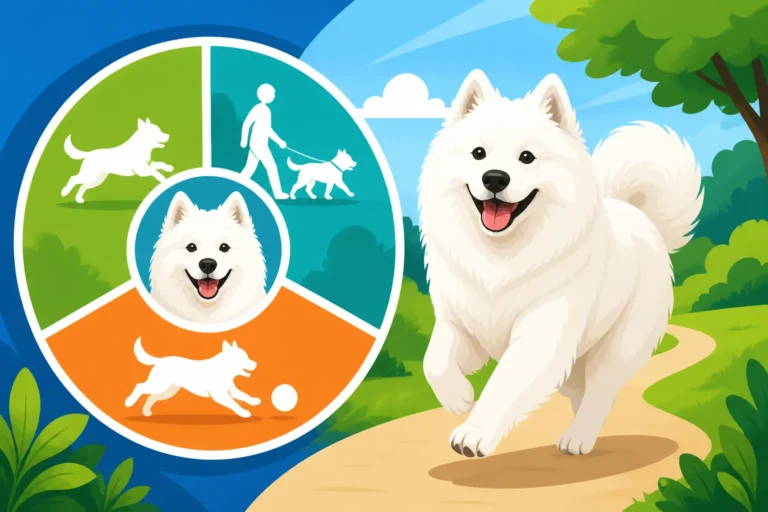
If a Samoyed isn't getting enough mental and physical stimulation, this drive to explore can become even stronger. A dog with pent-up energy, who hasn't had their needs met in terms of exercise and engagement, is far more likely to seek out their own entertainment – and that often means finding a way out. This is why it's crucial to consider How Much Exercise a Samoyed Needs on a daily basis. A tired Samoyed is often a less adventurous, and thus less escape-prone, Samoyed. They'll watch you open the gate, studying your movements, understanding cause and effect, until one day, you might find them mimicking your actions with uncanny accuracy.
Common Gate Latches Samoyeds Master
It might seem impossible, but your Samoyed’s dexterity and persistence are often underestimated. They can manipulate surprisingly complex mechanisms, often with just their nose and paws. Let’s look at some common latch types and how these clever dogs manage to defeat them.
Lever Handles and Thumb Latches
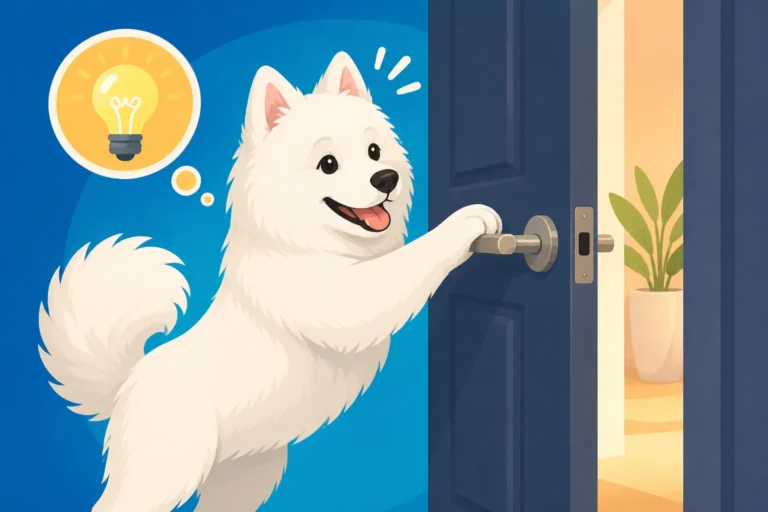
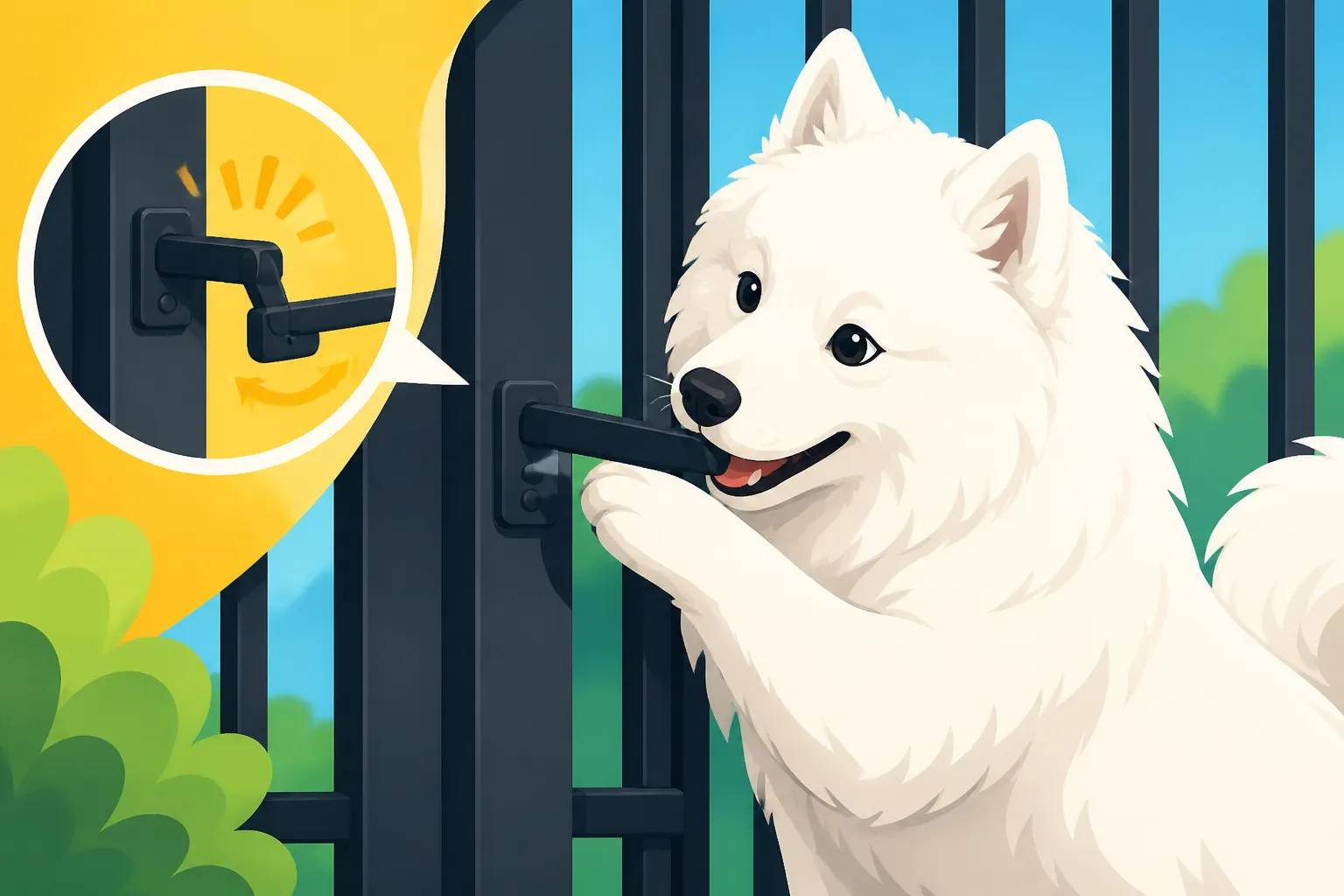
These are perhaps the most common culprits for Samoyed escapes. Lever handles, often found on side gates or even entry doors, are designed for human hands to press down and open. But a Samoyed can easily jump up, place a paw on the lever, and press it down with their body weight. Some will even learn to jump and nose the lever down with incredible precision. Imagine them standing on their hind legs, front paws braced against the gate, and using their snout to nudge that lever. It sounds far-fetched until you see it happen.
Thumb latches, which require a thumb to push a lever or button, seem more secure. However, a Samoyed can learn to combine a jump with a precise paw strike or even use their strong nose to depress the thumb lever while simultaneously pulling the gate towards them. They might lean against the gate, jiggle it, and then apply pressure to the latch mechanism. It's a two-part process that many Samoyeds have figured out through sheer trial and error. The satisfying click of the latch releasing quickly becomes a learned reward.
Bolt Locks and Barrel Bolts
You might think a robust bolt lock or barrel bolt, often seen on heavy-duty gates, is impregnable. After all, it slides horizontally into a receiving bracket. But don’t underestimate a persistent Samoyed. If there’s any play in the gate, or if the bolt isn’t perfectly aligned, a powerful Samoyed can sometimes rattle the gate enough to jiggle the bolt loose. They might chew at the wood around the bolt, try to pry it open, or even use their body to push and pull until the vibrations, combined with their clever pawing, eventually dislodge it.
We've heard stories of Samoyeds who learn to grab a loose bolt with their teeth and pull it back. A barrel bolt that isn’t quite snug, or a gate that sags just a little, can provide the tiny gap needed for a Samoyed to get a paw or a tooth in there and work it free. This is especially true for older gates where the wood might have warped, or the screws have loosened over time. What appears secure to us can be a weak point to a determined Samoyed.
Spring-Loaded Snaps and Carabiners
Many owners use spring-loaded snap hooks or carabiners as a secondary form of security, clipping them through a latch or gate chain. These seem simple enough, but they rely on a spring-loaded mechanism that can be surprisingly easy for a dog to manipulate. A Samoyed with a strong muzzle or clever paws can learn to press the thumb lever, open the gate, and then push it through the opening. It requires a bit of fine motor skill, but their persistence knows no bounds.
Imagine a Samoyed standing on its hind legs, batting at the carabiner. With enough nudging and pushing, the clip might just align in such a way that it snags on something, or the spring is depressed just enough for the gate to open. Some have even been observed using their teeth to pull back the spring mechanism. While these methods are often slower than simply flipping a lever, the Samoyed’s dedication to freedom means they will try repeatedly until they succeed. It's a lesson in patience for both dog and owner!
Fortifying Your Fences Against a Samoyed Escape Artist
Once you've realized your Samoyed has a knack for gate latches, it's time to get serious about security. This often involves a multi-pronged approach, because these dogs are thinkers, and they'll always be looking for the next weakness.
Upgrading Your Latches for Ultimate Security
The first line of defense is, of course, the latch itself. You need something that requires more than a simple push or pull. Consider investing in gate hardware designed for high security. Key-locking latches are excellent because they require a physical key to open, making them impossible for paws or noses to manipulate. Another great option is a double-sided latch that requires two distinct actions to open, such as pushing a button while simultaneously lifting a handle. Look for self-locking gates or latches that automatically engage once the gate is closed, preventing it from simply swinging open if your Samoyed leans on it.
When shopping for these, don't be afraid to look at specialized hardware stores or even platforms like Amazon for unique solutions. You'll find a range of heavy-duty gate latches, including some designed for livestock, that require more strength or complex movements than a dog can manage. Placement is also crucial: install latches high up, out of paw-reach, and consider adding a robust cover over the latch mechanism itself to prevent your Samoyed from getting their mouth or paws around it. A well-installed, complex latch is far more effective than a simple one, no matter how sturdy it looks.
Addressing Other Escape Routes
Remember, a latch is only one part of the puzzle. Samoyeds are notorious for their ingenuity, which extends beyond just opening gates. They are diggers and jumpers, and a secure latch on a vulnerable fence is still an invitation to escape. Many Samoyeds learn to exploit weaknesses at the bottom of the fence, digging tunnels with surprising speed. Addressing The Tunnel a Samoyed Digs Under a Fence might involve burying wire mesh (chicken wire or hardware cloth) along the fence line, extending it inward by a foot or two, or pouring a concrete footer.
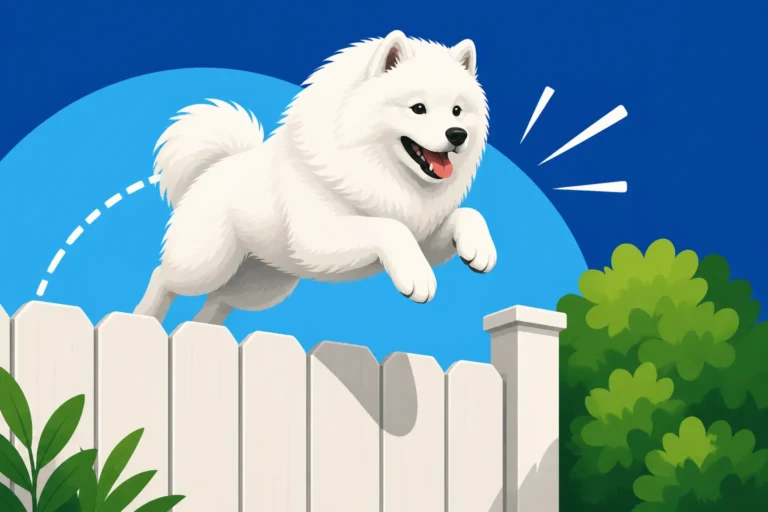
Similarly, don't underestimate their jumping ability. A Samoyed can clear impressive heights, especially if they have something to use as a launchpad. If your fence is shorter, you might need to consider extending its height. Even a dog-proof fence topper, like angled extensions, can deter the most acrobatic Samoyed. It’s also vital to regularly inspect your entire fence line for loose boards, damaged wire, or any other weak spots. What seems like a minor gap to you could be a wide-open invitation to a curious Samoyed. After all, a Samoyed only needs a small weakness to test How High a Samoyed Can Jump a Fence.
Training and Management Strategies
While hardware is important, behavioral strategies are equally critical. You can train your Samoyed to respect boundaries. Work on a strong "stay" command, especially near gates and doors. Practice having them sit and wait calmly while you open and close the gate, rewarding them heavily for not attempting to bolt. Positive reinforcement is key here; Samoyeds respond best to rewards and praise. Think about What a Samoyed Will Work For – usually, it's high-value treats and enthusiastic encouragement.
Consider using a long line for supervised outdoor time initially, even in a fenced yard, to practice recall and gate manners. If your Samoyed tries to interact with the gate latch, redirect their attention immediately with a toy or a training cue. Mental stimulation is also vital. A bored Samoyed is a destructive and escape-prone Samoyed. Engage them with puzzle toys, regular training sessions, and interactive games. Companies like BAXTER & Bella offer excellent online training resources that can help you implement consistent training strategies to manage their cleverness. Remember, consistency is king when you're dealing with a breed that finds Training a Samoyed That Finds Obedience Negotiable so naturally. They need clear rules and consistent reinforcement to understand what you expect.
| Latch Type | Samoyed-Proof Rating (1=Easy, 5=Hard) | Notes for Samoyed Owners |
|---|---|---|
| Simple Thumb Latch | 1 | Easily opened by paw or nose. Minimal security. |
| Lever Handle Latch | 1-2 | Can be pushed down with paw or nose. Consider height and cover. |
| Barrel Bolt / Slide Bolt | 2-3 | Can be rattled or jiggled loose if not installed snugly or if gate sags. |
| Spring-Loaded Snap/Carabiner | 2-3 | Can be manipulated with persistence, teeth, or careful pawing. Best as secondary. |
| Key-Locking Deadbolt | 5 | Requires a key, making it highly dog-proof. Excellent primary security. |
| Double-Action Latch | 4-5 | Requires two distinct movements (e.g., lift and push), challenging for paws. |
| Self-Latching Gate | 3-4 | Automatically engages, but ensure it's robust and can't be pushed open with force. |
Living with a Clever Escape Artist
Owning a Samoyed means accepting a certain level of ingenuity, especially when it comes to boundaries. They are wonderfully smart, but that smartness sometimes comes with the challenge of a canine mastermind.
Constant Vigilance is Key
Even with the most secure latches and fences, a Samoyed owner's work is never truly done. These dogs are observant, and they learn. That means you need to adopt a mindset of constant vigilance. Make it a routine to check all gate latches and fence lines daily for any signs of wear, damage, or new vulnerabilities. What was secure last week might be compromised today by weather, a loose screw, or your Samoyed’s latest "project."
Never assume a gate is latched just because it's closed. Always double-check. When leaving your yard, physically test the gate yourself. Teach all family members, and especially any visitors, the importance of proper gate closing. One momentary lapse is all it takes for your Samoyed to be off on an adventure. They are quick, and their instinct to explore when an opportunity arises is very strong. This is also Why a Samoyed's Recall Cannot Be Trusted in an open environment, making secure containment paramount.
Emergency Preparedness
Despite your best efforts, sometimes escapes happen. It's not a reflection of your care, but simply the reality of living with such a clever and independent breed. Being prepared for this eventuality is crucial. First and foremost, ensure your Samoyed is microchipped and that your registration details are up to date. This is one of the most effective ways to reunite with a lost pet. Also, make sure they wear a collar with current ID tags, as this provides immediate contact information. Whether a Samoyed Should Be Microchipped is not really a question, it's a necessity.
Keep current, clear photos of your Samoyed handy on your phone. If they do go missing, these photos are invaluable for creating "lost dog" posters or sharing on social media. Know the contact information for your local animal shelters and humane societies. Some owners even consider a GPS collar for added peace of mind, especially if their Samoyed has a history of escapes. Whether a GPS Collar Is Worth It for a Samoyed often depends on individual circumstances and your dog's escape history, but for an active escape artist, it can be a lifesaver.
Enriching Their Environment
Ultimately, one of the best ways to deter a Samoyed from escaping is to make their home environment so engaging and fulfilling that the allure of the outside world isn't as strong. A Samoyed who is bored or has too much pent-up energy is a Samoyed who will look for an outlet, and that outlet often involves escape. Think about What a Bored Samoyed Does to a House – it's usually destructive, and the yard isn't immune.
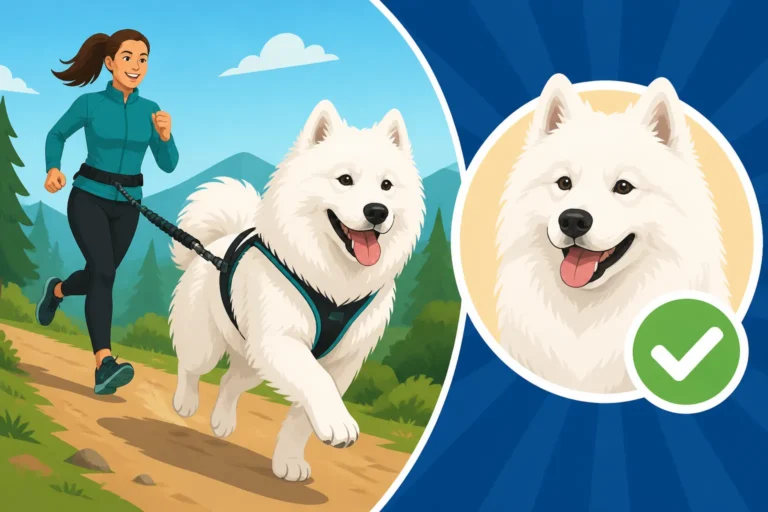
Provide plenty of opportunities for both physical exercise and mental stimulation. This includes daily walks, runs, or play sessions, but also puzzle toys, training games, and interactive play with you. Rotate their toys to keep things fresh. Engage their working breed instincts with activities like scent work, obedience training, or even supervised pulling activities if they're old enough and healthy. A mentally and physically tired Samoyed is a content Samoyed, and a content Samoyed is far less likely to be plotting their next great gate escape. Make their yard a fun place to be, and they’ll be less inclined to seek adventure beyond its borders.
Disclaimer
This article is for general informational purposes only and does not constitute professional advice. Laws, prices and regulations vary by location and change over time. Consult a qualified professional for guidance on your specific situation.