Whether the Samoyed Was Ever Crossed With Anything
It’s a common question that pops up when you're delving into the history of any dog breed: were they ever intentionally mixed with other types of dogs, or are they a pure, unadulterated lineage stretching back centuries? For Samoyed enthusiasts, the thought of their beloved "Bjelkier" being anything but truly ancient can be a bit jarring. Many people wonder if the Samoyed, with its distinctive smile and thick coat, was ever deliberately crossed with other breeds to achieve its current form, or if its heritage is as pristine as the Siberian snows from which it emerged. This guide will explore the Samoyed's deep historical roots and clarify what "crossing" truly means in the context of such an ancient canine.
The Samoyed's Ancient Roots: A Breed Shaped by Nature, Not Crosses
When we talk about the Samoyed, we’re not discussing a breed that was carefully concocted in Victorian England by mixing a dash of this terrier with a sprinkle of that mastiff. Oh no, the Samoyed's story is far more primal and captivating. These aren't designer dogs in any modern sense; they are a truly ancient breed, one of the fourteen dog breeds whose DNA is closest to that of wolves. That's a profound statement, isn't it? It means their genetic blueprint hasn't undergone the extensive human manipulation that created so many of the breeds we see today.
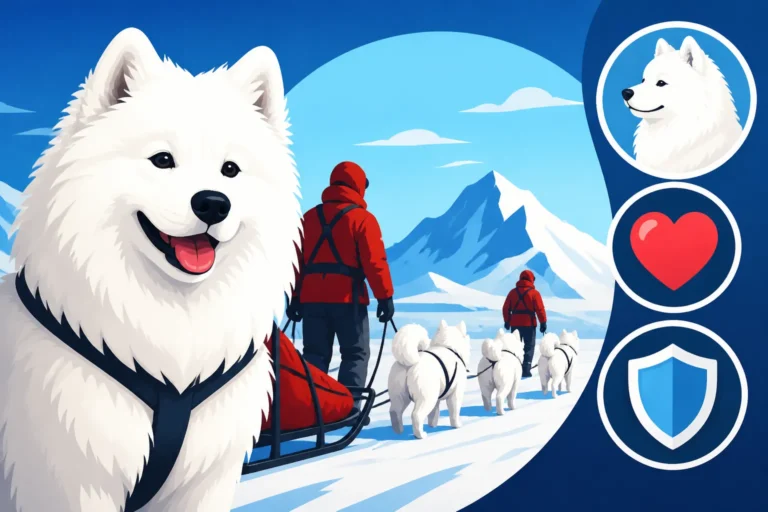
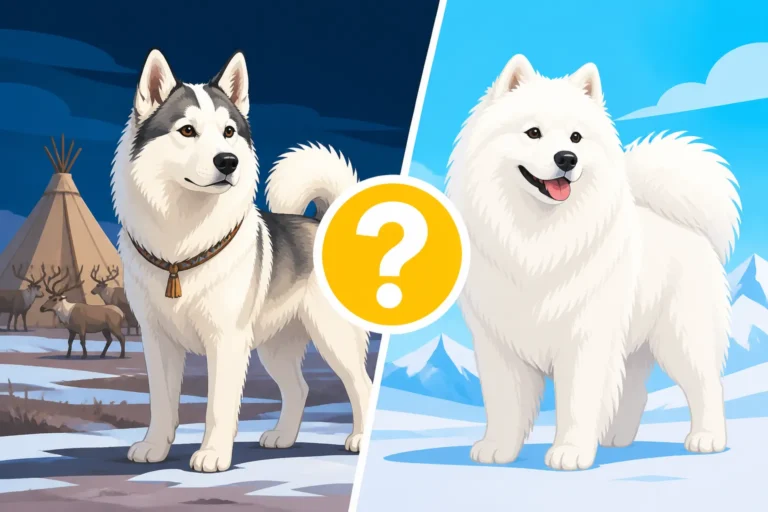
Imagine the vast, unforgiving expanses of Siberia, particularly the Yamal Peninsula. For thousands of years, the nomadic Nenets people relied on these dogs for their very survival. These weren't pets in the way we often think of them now; they were partners, essential members of the tribe. They herded reindeer, pulled sleds through impossible snowdrifts, and even snuggled into the tents with the families, providing warmth on nights that could plunge to sixty below zero. This intimate relationship, spanning millennia, forged the Samoyed. It wasn't about intentional crossbreeding with other established breeds because, quite frankly, there weren't many established breeds in the remote Arctic to cross with.
Instead, the dogs that would become the Samoyed evolved through natural selection and the specific needs of The Nenets of the Yamal Peninsula Bred the Samoyed. The hardiest, most intelligent, and most cooperative dogs survived and reproduced. Traits like that iconic smile, which actually prevents icicles from forming around their mouths, weren't accidental; they were functional adaptations. Their dense double coat, their incredible stamina, their gentle yet independent nature – these are all hallmarks of a breed shaped by a harsh environment and a singular purpose. To learn more about their incredible lineage, you might be interested in How Old the Samoyed Breed Really Is.
Evolution in Isolation: Why "Crossed" Isn't the Right Word
The concept of "crossing" typically implies a deliberate mating between two distinct, often recognized, breeds to achieve specific traits. Think of a Labradoodle, for instance. That's a purposeful cross between a Labrador Retriever and a Poodle. But the Samoyed's history predates such selective breeding programs by thousands of years.
The dogs of the Nenets people lived in relative isolation. There wasn't a diverse gene pool of other domesticated dog breeds readily available for them to mix with. Any "mixing" that occurred would have been with the wild canids of the region, like wolves, or with other primitive dog types that were essentially proto-breeds, dogs that had not yet been formally recognized or selectively bred into distinct groups. These interactions were more about shared ancestry and environmental pressures than intentional crossbreeding experiments. The Samoyed's robust health and unique genetic markers are a testament to this deep, ancient lineage.
When you look at the genetic map of domestic dogs, Samoyeds stand out as a foundational breed, often referred to as a "basal breed." This means they predate most modern breeds and contributed to the genetic makeup of many others, rather than being a product of them. So, while their ancestors might have interbred with wild wolves or other ancient canine populations over vast stretches of time – a process of natural evolution and gene flow – it wasn't "crossing" in the way we understand it in modern dog breeding. This distinction is crucial for understanding the true heritage of these magnificent animals.
The Original Purpose: A Multifaceted Working Dog
The development of the Samoyed breed was driven purely by utility and survival within the Nenets tribes. These dogs were never just about one job; they were multi-purpose, incredibly versatile animals. While many associate them with sledding, their role extended far beyond that.
The primary function of the Samoyed-type dog was reindeer herding. They would keep the vast herds together, moving them from pasture to pasture across the immense tundra. This required a delicate balance of drive and gentleness – qualities that are still evident in the breed today and can surprise new owners, as discussed in The Herding Instinct Nobody Expects From a Samoyed. Beyond herding, they were invaluable for transportation, pulling sleds laden with supplies, often in small teams or individually. They served as warm companions inside the chum (tent), a role truly highlighted in The Samoyed Slept in the Tent to Keep People Alive.
Given these vital roles, the Nenets people wouldn't have deliberately introduced traits that compromised their dogs' survival or effectiveness. An outsider dog, unacclimated to the extreme cold or lacking the innate herding or pulling instincts, would have been a liability. Thus, their "breeding program" was effectively one of selective retention: keep the best workers, the healthiest, the most cooperative. This ensured a consistent genetic line, naturally resistant to outside influences, rather than one subjected to deliberate crossbreeding.
Unpacking "Crossing": Ancestral Connections vs. Intentional Hybrids
The word "crossed" can carry a few different meanings when we talk about dogs, and it’s important to distinguish them when discussing the Samoyed. On one hand, you have the deep, ancient genetic connections that link all dogs to their wolf ancestors and to each other in the vast timeline of canine evolution. On the other, you have the modern phenomenon of intentional crossbreeding, where two distinct, purebred dogs are mated to create a "designer dog."
Deep Lineage and Wolf Ancestry
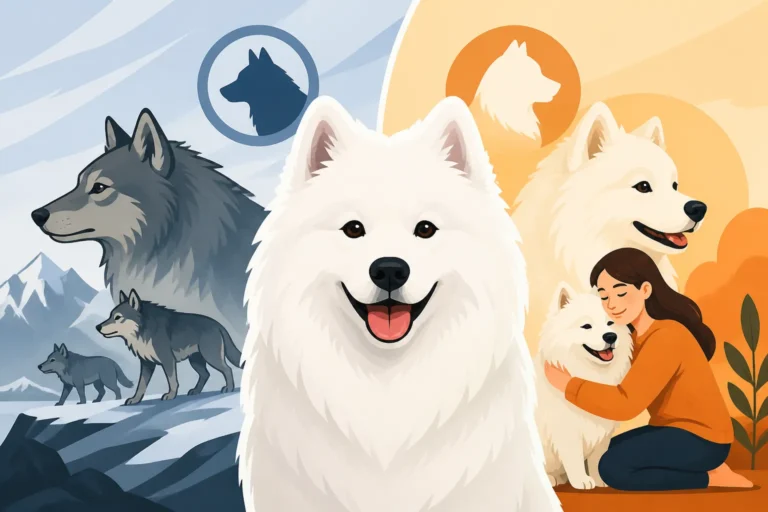
When people ask if the Samoyed was "crossed with anything," sometimes they're really asking about its fundamental origins and its relationship to wild canids. And yes, all domestic dogs, including the Samoyed, share a common ancestor with wolves. The Samoyed is genetically quite close to its wolf ancestors, much more so than many modern breeds. This isn't a "crossing" that happened in a specific generation or two, but rather a shared evolutionary journey that took place over tens of thousands of years.
Researchers studying canine DNA often look at basal breeds like the Samoyed to understand the deepest branches of the dog family tree. What the Samoyed's DNA reveals (see What the Samoyed's DNA Says About Its Ancestry) is a lineage that split off from the wolf population very early in the domestication process. These dogs retained many primitive traits, both physically and behaviorally, that reflect this ancient bond. Their thick coats, their vocalizations (which are often more "talking" than barking), and their incredible resilience are all echoes of their wild past.
So, if "crossing" means sharing a common ancestor and having a strong genetic overlap with wolves, then yes, the Samoyed has those deep, ancestral connections. But it’s crucial to understand this as a foundational genetic relationship, not a specific, deliberate breeding event between a dog and a wolf by human intervention within the recognized breed's history. These ancient dogs existed in a liminal space between wild and fully domesticated, and their genetic makeup reflects that historical reality. How Closely the Samoyed Is Related to the Wolf offers more insight into this fascinating connection.
The Absence of Modern "Designer Dog" Origins
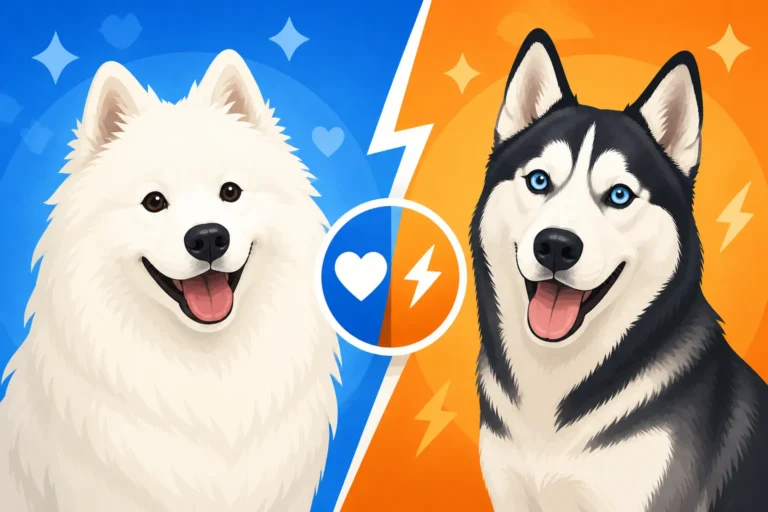
Contrast this ancient lineage with the modern trend of "designer dogs." These are typically first-generation crosses between two distinct purebreds, like a Goldendoodle (Golden Retriever x Poodle) or a Pomsky (Pomeranian x Husky). The goal is often to combine desirable traits from both parents, whether it's temperament, coat type, or perceived health benefits.
The Samoyed breed was not formed this way. There's no historical record, no anecdotal evidence, and certainly no genetic signature that suggests the original Samoyed-type dogs were created by taking, say, a Siberian Husky and a Great Pyrenees and mixing them together. The very concept of distinct "breeds" in that context didn't exist in the remote Arctic when the Samoyed was being forged by nature and necessity. The dogs of the Nenets were a homogeneous population, adapting to their environment as a singular type. They weren't a blend of pre-existing, distinct breeds.
This inherent purity is a hallmark of truly ancient breeds. It’s part of what makes them so unique and fascinating to study. They represent a living link to the earliest days of canine domestication, before humans began to fragment the dog population into the hundreds of diverse breeds we recognize today. Their resilience, their instincts, and their physical characteristics are the result of thousands of years of natural and functional selection, not a carefully planned crossbreeding program.
Why the Samoyed's Genetic Purity Matters (and What it Means for You)
Understanding the Samoyed's status as an ancient, genetically pure breed isn't just a fascinating historical tidbit; it has real implications for owners, breeders, and the future of the breed. It speaks to their inherent traits, their health profile, and even their temperament.
Breed Standard and Type Consistency
For centuries, the Samoyed type was honed by its environment and purpose. When the breed was eventually brought to Western civilization and formalized into a breed standard, there was a consistent blueprint to work with. The traits that made them exceptional reindeer herders and sled dogs – their powerful yet agile build, their dense coat, their social nature, and their intelligence – were already deeply embedded in their genetic code.
This long history of genetic purity means that well-bred Samoyeds tend to be remarkably consistent in appearance, temperament, and working ability. You know, broadly, what you're getting when you bring a Samoyed puppy into your home. This consistency is a direct result of thousands of years of natural selection and a lack of significant outcrossing with other diverse dog types. It means the breed isn't a patchwork of genetic contributions from various other breeds; it's a deeply established and self-contained lineage.
This consistency also contributes to the breed's recognizability and iconic "Sammy smile." People often ask, Why the Samoyed Smiles, and it’s a trait that has been present for generations, solidified by the very harsh conditions that demanded no drooling or ice accumulation around the mouth. This is a testament to natural selection acting on a genetically stable population.
| Characteristic | Ancient/Primitive Breed (e.g., Samoyed) | Modern Crossbreed (e.g., Goldendoodle) |
|---|---|---|
| Origin | Shaped by environment, utility, indigenous people | Deliberate pairing of two established breeds |
| Genetic Diversity | Often has unique ancient genetic markers | Mixes genetics of parent breeds |
| Primary Driver | Natural selection, survival, functional purpose | Human desire for specific combination of traits |
| Type Consistency | High degree of consistency across generations | Varies widely, especially in early generations |
| Historical "Mixing" | Ancestral ties to wolves, other proto-dogs | Intentional mating of recognized breeds |
| Health Profile | Can carry ancient breed-specific conditions | Can inherit conditions from both parent breeds |
Understanding Breed-Specific Health
Another important aspect of the Samoyed's ancient lineage is its breed-specific health concerns. Because the breed developed largely in isolation and without extensive genetic mixing, certain genetic predispositions became inherent to the line. This doesn't mean they are unhealthy; it means that any responsible Samoyed owner or prospective buyer needs to be aware of the health tests that should be performed on breeding stock.
Conditions like The Kidney Disease That Kills Samoyed Males Before Fifteen Months (Samoyed Hereditary Glomerulopathy), hip dysplasia, and certain eye conditions are known within the breed. These aren't necessarily introduced from "crossings" with other breeds; rather, they are part of the genetic tapestry that developed over millennia. Responsible breeders actively work to screen for these conditions, using tools like DNA tests for kidney disease (as discussed in The COL4A5 Test Every Samoyed Buyer Should Ask About) and certifications for hips and eyes, to ensure they are producing the healthiest puppies possible. Understanding the breed's ancient origins helps us contextualize these health challenges and appreciate the ongoing efforts to preserve the breed's vitality.
This is a critical point for anyone considering a Samoyed. You're not just getting a fluffy, smiling dog; you're adopting a piece of living history. This comes with a responsibility to understand and support the breed's health, which is rooted in its unique genetic past. The longevity of these dogs, often The Twelve to Fourteen Years a Samoyed Lives, is a testament to their inherent robustness when cared for properly.
Modern Samoyed Mixes: A New Chapter, Not the Original Story
While the Samoyed breed itself was not historically "crossed" in its formation, it's a completely different story in the modern world. Today, intentional crosses involving Samoyeds do exist, as people explore combinations of traits from different breeds. It's important to differentiate these contemporary mixes from the historical development of the Samoyed purebred.
The Rise of "Samoyed-Something" Dogs
In recent decades, there has been an increasing interest in various "designer dog" crosses, and the Samoyed is no exception. You might encounter terms like "Samoyed-Poodle mix" (Sammy-doodle), "Samoyed-Husky mix," or even "Samoyed-Golden Retriever mix." These are deliberate pairings created by humans, usually within the last few generations, to achieve a particular look, temperament, or coat type.
For example, a "Samoyed-Poodle mix" might be bred with the hope of combining the Samoyed's beautiful coat and friendly disposition with the Poodle's intelligence and potentially lower shedding qualities. However, it's crucial to understand that these are modern experiments, and the results can be highly variable. Unlike purebred Samoyeds, who have thousands of years of consistent genetic selection behind them, a first-generation cross offers no guarantee of inheriting the "best" traits of both parents. Puppy A from the same litter might look and act completely different from Puppy B.
These modern crosses are not part of the Samoyed's historical development. They are a new chapter, driven by contemporary preferences, and distinct from the ancient, natural formation of the purebred Samoyed. If you're looking for a dog with the predictable traits of a purebred Samoyed, a mix will likely not offer that same level of consistency. For any dog owner, whether purebred or mixed, understanding nutrition is key, and brands like Chewy offer a vast array of options to meet diverse dietary needs.
Considerations for Samoyed Mixes
If you're considering a Samoyed mix, it’s important to approach it with a realistic understanding of what that entails. You're getting a blend of two different purebreds, and while there can be wonderful qualities in these mixes, there are also unknowns.
- Predictability: The greatest challenge with mixes is the lack of predictability. You won't know for certain which parent's genes will be dominant in terms of appearance, coat type, size, temperament, or even health predispositions. A Samoyed-Poodle mix, for instance, might shed less than a pure Samoyed, or it might shed just as much. It might have the Samoyed's vocal nature or the Poodle's calmer disposition.
- Health: While some people believe mixes are inherently healthier due to "hybrid vigor," this isn't a given. A mix can inherit genetic health conditions from either parent breed. For example, a Samoyed mix could still be prone to Hip Dysplasia in a Samoyed or other orthopedic issues common in larger breeds. It’s essential to ask about the health testing of both purebred parents of any mix.
- Purpose: Purebred Samoyeds were bred for a clear purpose over millennia. Their traits are functionally selected. Modern mixes often lack this unified purpose, and their traits can sometimes be contradictory. For instance, the high drive of a Samoyed combined with another strong working breed could result in a very high-energy dog that requires significant management.
The beauty of the Samoyed lies in its ancient heritage and the consistent characteristics that define it. While modern mixes are a personal choice for many, they should be viewed as a departure from the historical purity of the Samoyed line, not an extension of it. When it comes to finding appropriate food and toys for your Samoyed, whether purebred or a mix, reputable online retailers like Chewy provide convenient access to a wide variety of products. Always research breeders carefully, whether they breed purebreds or mixes, and consider how the specific combination of breeds might manifest. Finding quality products for your Samoyed’s unique coat can be a challenge, but Chewy has a good selection of grooming tools and shampoos tailored for double-coated breeds. Even for Samoyed mixes, a robust diet is essential, and Chewy offers diverse nutritional options.
In conclusion, the Samoyed, as a purebred, was forged in the crucibles of Arctic survival and indigenous partnership, not through deliberate crossbreeding with other distinct dog breeds. Its "crossing" was with its wolf ancestors and the harsh environment that shaped its resilient and beautiful form. The modern phenomenon of Samoyed mixes is a separate, more recent development that does not alter the ancient, proud history of the breed itself.
Disclaimer
This article is for general informational purposes only and does not constitute professional advice. Laws, prices and regulations vary by location and change over time. Consult a qualified professional for guidance on your specific situation.