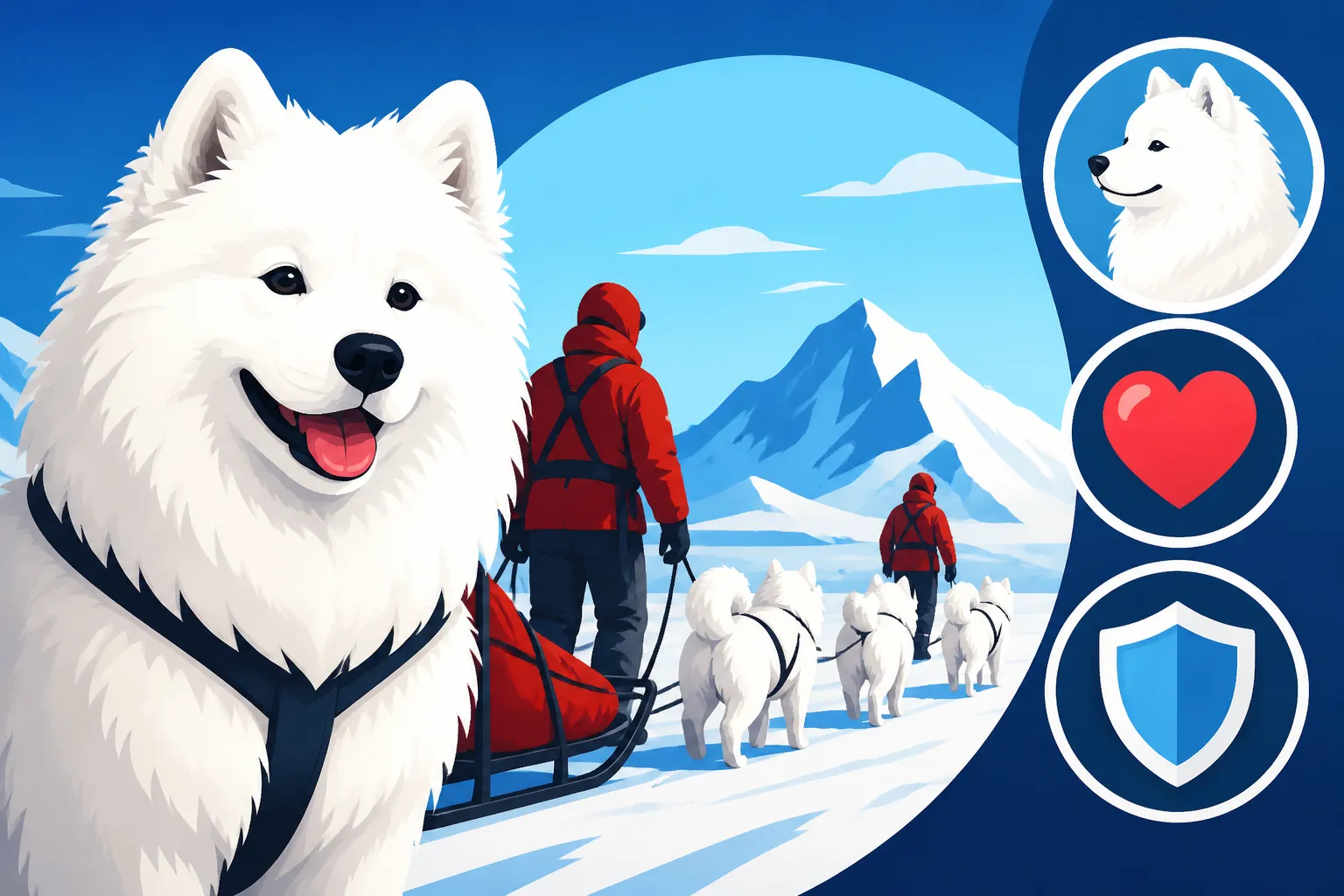
Why Antarctic Explorers Chose Samoyeds
Antarctic explorers needed dogs that could haul loads across snow, cope with severe cold, and work closely with people far from help. Samoyeds had many of the qualities that made northern sled dogs valuable, but they were not the only dogs on the ice—and expedition teams were not always neatly divided by modern breed labels. Here’s what made Samoyeds appealing, and what their polar work was really like.
Why Samoyeds Appealed to Polar Explorers
A working dog with the right kind of experience
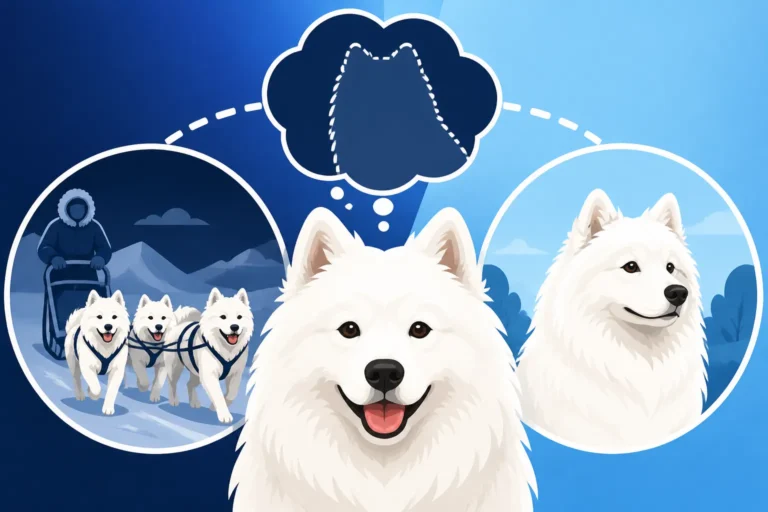
Samoyeds came from northern Siberia, where people relied on dogs for practical work in demanding conditions. They helped move goods by sled and lived closely alongside the families who depended on them. That background mattered to explorers: they needed dogs accustomed to hauling, cold weather, and human direction—not simply animals that looked well suited to a snowy landscape.
The skills associated with Samoyeds were part of a broader northern sled-dog tradition. Dogs could help transport supplies, support travel between camps, and make long journeys more manageable for a human party. To understand that working heritage, it helps to look at What the Nenets Bred the Samoyed to Do and How a Samoyed Pulled a Sled.
Explorers did not, however, select every dog according to the modern breed standards people use today. Early accounts and later retellings may use names such as “Samoyed” broadly, while expedition teams could include dogs of mixed or uncertain northern ancestry. The label tells part of the story, but it does not guarantee that every dog in a team belonged to a clearly documented pedigree.
A coat suited to a punishing climate
A Samoyed’s dense double coat is one obvious reason the breed seems at home in polar history. The outer coat and insulating undercoat help protect the dog from cold, wind, and snow. That protection is useful, but it is not a magic shield: a working dog still needs food, rest, shelter, paw checks, and a handler who notices when it is struggling.
Polar travel placed demands on dogs that ordinary winter walks do not. Wind chill, hard or uneven snow, long working days, and limited opportunities to recover could all turn exposure into a serious problem. The coat helped, but careful care mattered just as much. How a Samoyed Survives Sixty Below explains the difference between cold-weather adaptation and being invulnerable to cold.
A pale coat may look like an obvious advantage in a white landscape, but it is safer not to assume that explorers chose Samoyeds mainly for camouflage. Practical qualities—working ability, cold tolerance, access to suitable dogs, and the judgment of the people assembling an expedition—were more important than a photogenic match between dog and snow.
What Dogs Contributed to Antarctic Expeditions
Moving supplies across snow
In the age of early polar exploration, moving equipment and provisions was a central challenge. A dog team could pull a loaded sled, reducing the amount of weight people had to carry themselves. The dogs’ work supported travel and logistics, though the precise role of each team depended on the expedition, terrain, weather, and available supplies.
Sled dogs were not a simple substitute for human labor. They needed food and water, and their handlers had to manage harnesses, loads, pace, and rest. A team that pulled too heavily or travelled too far could become injured or exhausted. The work depended on cooperation between dogs and people, not just raw strength.
| What an expedition needed | How sled dogs could help | What still made the work difficult |
|---|---|---|
| Transport for supplies | Pulling sleds over snow and ice | Loads, routes, and conditions could change |
| Reliable travel support | Working as a team under a handler | Dogs needed food, rest, and close monitoring |
| Cold-weather capability | Northern dogs had coats and experience suited to harsh conditions | Severe exposure could still injure or exhaust them |
| A manageable camp routine | Dogs could live and work alongside expedition members | Feeding, housing, and team discipline took effort |
The dogs’ contributions also depended on good decisions by their handlers. A strong dog could not compensate for an unsafe route or an overloaded sled. Nor could a team be treated as a machine: temperament, health, training, and relationships within the group all affected how well it worked.
Working as a team, not as individual heroes
A sled team’s success depended on coordination. Dogs had to move in harness, respond to direction, and tolerate the close quarters of expedition life. People needed to understand the dogs’ behavior and adjust their plans when conditions or the animals’ condition changed.
Samoyeds are often described as people-oriented, a trait that fits the close working relationship polar travel demanded. But friendliness alone does not make a dog a dependable expedition worker. Training, experience, sound health, and a suitable temperament all matter. Even capable working dogs can become stressed or difficult to manage when crowded, tired, hungry, or in pain.
It is easy to picture a smiling Samoyed happily leading a sled across untouched snow. The real picture was more complicated: dogs had to work through fatigue, rough conditions, and uncertainty, while people had to care for them and make choices that affected the whole team. The appealing image should not obscure the demanding, sometimes harsh reality of expedition work.
Samoyeds and the Famous Polar Journeys
Etah and the story of reaching the South Pole
One of the best-known dogs associated with the South Pole is Etah, often identified as a Samoyed and remembered for her place in Roald Amundsen’s expedition. Her story has become closely tied to the breed’s polar reputation. For more background, see Who Etah the Samoyed Was and Etah, the Samoyed That Reached the South Pole First.
Etah’s fame can make it sound as though a team of purebred Samoyeds carried Amundsen to the Pole. That oversimplifies the history. Expedition teams included many dogs, and accounts of their origins and breed identities are not always consistent by modern standards. Etah is a memorable individual, but her story should not be used to label every dog in the expedition as a Samoyed.
This distinction does not diminish the breed’s place in polar history. It makes the story more accurate. Samoyeds were among the northern dogs associated with exploration, while individual dogs—not just breed names—were central to the work. A useful companion read is Which Polar Expeditions Used Samoyeds, which looks at the wider history rather than treating one famous dog as the whole story.
Different expeditions made different choices
There was no single standard Antarctic dog team. Explorers had different plans, resources, and experience with animals. Some relied on dogs, while others used combinations of transport methods or made choices shaped by what they could obtain. The dogs’ origins and roles varied from journey to journey.
That is why broad claims such as “explorers chose Samoyeds because they were the best polar dogs” need a little care. Samoyeds possessed useful working traits, but they were one part of a wider northern sled-dog world. The story of how dogs reached the expeditions is also tied to the movement of people, animals, and knowledge between Siberia and Europe; How Polar Explorers Took Samoyeds Out of Siberia explores that connection.
The hardships were real, too. Long travel, demanding workloads, scarce supplies, injuries, illness, and extreme weather all affected expedition dogs. Some dogs did not return, and the conditions could be brutal. What Happened to Expedition Samoyeds on the Ice and Which Expedition Samoyeds Came Home offer useful context for the parts of the story that can be lost when attention stays only on famous journeys and celebrated milestones.
What Their Polar History Means for Samoyed Owners Today
A historic working role is not a modern exercise plan
A Samoyed’s history helps explain why many dogs of the breed enjoy activity, company, and having a job to do. It does not mean that a pet Samoyed should be expected to work like an expedition dog. Modern dogs differ in fitness, experience, health, and individual temperament, and Antarctic travel involved conditions that are unsafe to recreate casually.
If you want to channel that working heritage, choose activities that match your dog’s age and condition. A walk, a training game, or a properly introduced pulling sport can provide an outlet without turning exercise into a test of endurance. For activities such as sledding, seek qualified instruction and build up gradually; a Samoyed’s ancestry is not a substitute for appropriate training or veterinary guidance.
Owners also have everyday needs that have little in common with a polar expedition. Keeping the coat clean, planning meals, and finding suitable supplies are ordinary parts of care. Some people use retailers such as Chewy when organizing routine pet essentials, but the important thing is to choose items that suit the individual dog rather than assume that expedition history dictates modern equipment.
Care and welfare matter more than the heroic image
The historical image of the Samoyed as a tough, snow-loving dog can lead people to underestimate the care the breed needs. A thick coat does not make a dog immune to overheating, and a strong desire to play does not mean it can safely exercise in every condition. Watch your dog’s comfort and behavior, and make adjustments for weather, age, and health.
Coat care is another practical difference between life on an expedition and life at home. Regular brushing helps manage loose undercoat and prevent tangles, especially in areas where friction can cause mats. For everyday grooming supplies, a retailer such as Chewy may be one option, but careful technique and a routine your dog tolerates matter more than any particular shopping source.
The dogs who worked in Antarctica were part of a demanding human undertaking, not just symbols of a breed’s toughness. Remembering both their abilities and their vulnerabilities gives a fuller picture of why explorers valued northern sled dogs—and why modern Samoyeds deserve thoughtful, individualized care. If you are considering a Samoyed, Chewy may help with routine supply shopping, but a good understanding of the breed’s needs is the more important starting point.
Disclaimer
This article is for general informational purposes only and does not constitute professional advice. Laws, prices and regulations vary by location and change over time. Consult a qualified professional for guidance on your specific situation.