How Tall a Fence a Samoyed Needs
It's a familiar scenario for many Samoyed owners: you’ve carefully installed a fence, confident your fluffy escape artist is safely contained, only to look up and realize they’re nowhere to be found. Samoyeds, with their boundless energy and inquisitive nature, are notorious for finding – or creating – the path less traveled out of seemingly secure yards. This guide is here to walk you through exactly what kind of fence height and additional measures you truly need to keep your intelligent, adventurous Samoyed safely in your yard and out of harm's way.
Understanding Your Samoyed's Escape Artist Tendencies
Before we even talk about specific fence heights, it’s crucial to understand why your Samoyed might be eyeing the great beyond. It’s not about disobedience as much as it is about their innate intelligence, athleticism, and historical drive. These dogs were bred for working, which means they’re smart, strong, and highly motivated.
The Jumping Prowess of a Samoyed: It’s More Than Just a Hop
Don't let that fluffy cloud exterior fool you; beneath all that gorgeous fur is a surprisingly agile and athletic dog. Samoyeds can jump. And when they have a good reason – be it a squirrel darting across the neighbor's yard, a person walking by, or just the sheer joy of exploring – they can clear impressive heights. Many owners are genuinely shocked to see their Samoyed gracefully sail over a fence they assumed was perfectly adequate. It's not just about reaching the top; it's about the launch. If a Samoyed gets a running start, or if there's anything nearby they can use as a stepping stone (a woodpile, a dog house, even a snowdrift!), their effective jump height increases dramatically. We've heard countless stories of Samoyeds who seemed to defy gravity, making a 4-foot fence look like a mere hurdle. If you're wondering How High a Samoyed Can Jump a Fence, the answer is often "higher than you think."
Digging: The Samoyed's Underground Escape Route
Jumping might be one way out, but digging is often the Samoyed's preferred, more stealthy method of escape. These dogs come from a lineage where digging was a necessary skill for survival, whether it was to find small prey, create a cool spot to lie down, or simply to express boredom. In your backyard, this ancient instinct can manifest as a persistent, determined effort to tunnel under your fence. A bored Samoyed, or one that’s feeling the summer heat, will often start digging trenches right along the fence line. It's an instinctive behavior, and a very natural way for them to cool off by reaching the cooler earth underneath, which is why The Digging a Samoyed Does Because It Is Hot is such a common occurrence. Before you know it, a small divot can become a full-fledged escape tunnel, granting them access to the wider world.
The Curiosity and Wanderlust of the Samoyed
Samoyeds are naturally curious and possess a strong prey drive. They were bred to herd reindeer over vast, open expanses, and that instinct for independent travel and exploration still runs deep. If they see something interesting on the other side of the fence – a rabbit, a cat, or even just a compelling scent – their instinct is to investigate. This isn't naughtiness; it's simply their breed's inherent drive. Their desire to explore means they will actively look for weaknesses in your containment, whether that's a loose board, a gate that isn't quite latched, or an opportunity to dig. This strong independent streak is also why Why a Samoyed's Recall Cannot Be Trusted is a lesson many owners learn the hard way once their Samoyed is outside the confines of a fence. They’re not necessarily disobedient, but they are often more interested in the exciting new smells and sights than your calls to come back.
Recommended Fence Heights for Samoyeds
So, given their impressive array of escape tactics, what's a realistic fence height for a Samoyed? It's often a bit higher than what you might consider "standard" for other breeds.
Minimum Height for a Standard Samoyed
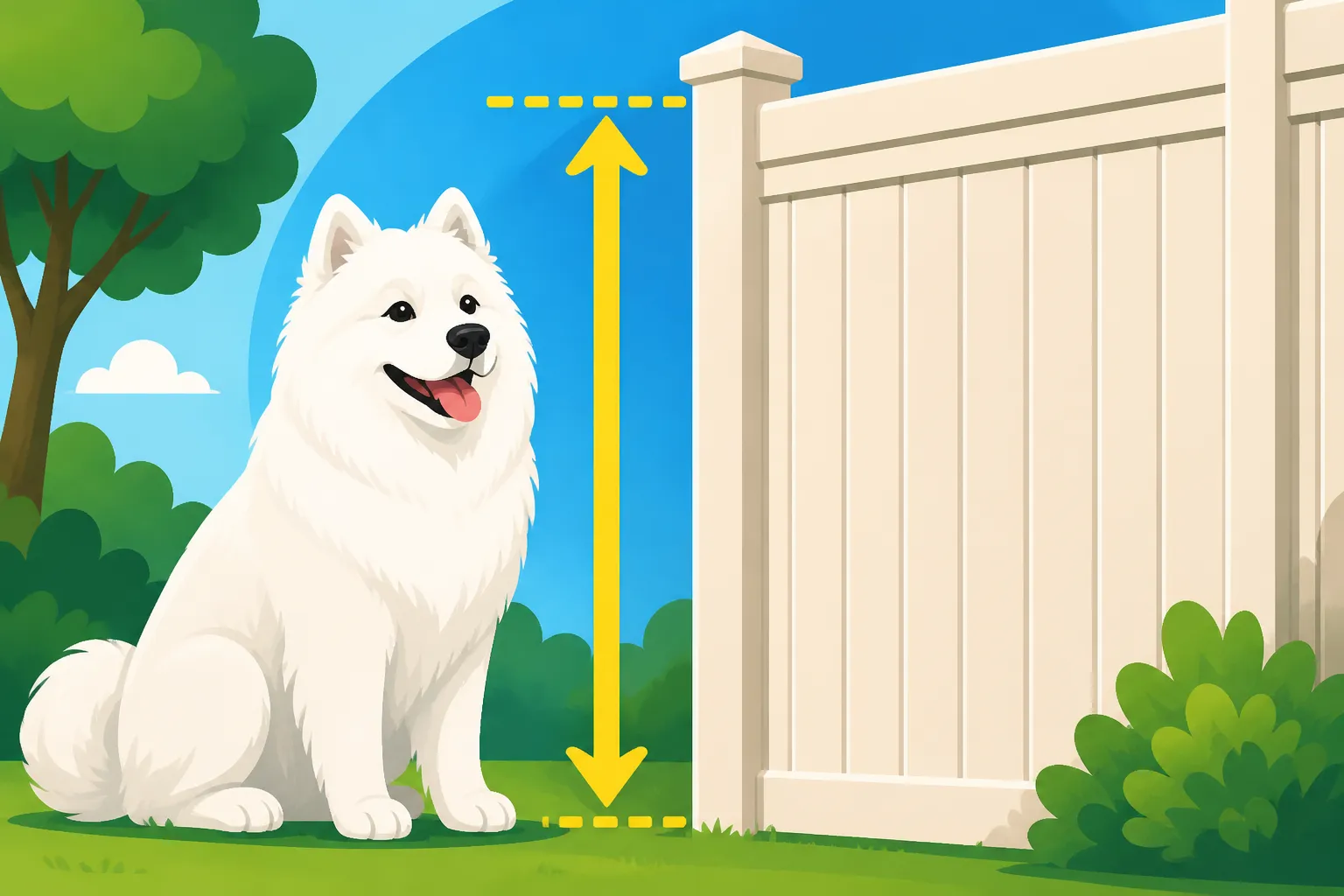
For most Samoyed owners, a 6-foot fence is considered the absolute bare minimum. This height provides a decent deterrent for the average Samoyed, especially if they aren't highly motivated to escape. It's tall enough that a casual jump is unlikely, and it creates a visual barrier that sometimes makes them less inclined to try. However, it’s crucial to understand that 6 feet is a starting point, not a guarantee. We've seen plenty of athletic, determined Samoyeds clear a 6-foot fence without much trouble, especially if they have an obstacle to assist their leap. Think of it as your first line of defense, but be prepared to reinforce it. For this reason, many Samoyed breed clubs and experienced owners will often tell you that a 6-foot fence is barely sufficient and highly recommend exploring additional measures or a taller option.
Considering a Taller Fence: Going Beyond the Minimum
For Samoyeds who are particularly athletic, possess a high prey drive, or simply seem more determined to explore beyond the yard, an 8-foot fence might be a far more appropriate, and safer, choice. This height significantly reduces the likelihood of a successful jump. If installing an 8-foot fence isn't feasible, consider adding extensions to your existing 6-foot fence. These can include lattice toppers, T-posts with wire, or even "coyote rollers" that prevent a dog from getting a grip on the top of the fence. Some owners install angled extensions inward at the top of a 6-foot fence, making it even harder for a Samoyed to get the leverage needed to jump over. The goal is to create a barrier that feels insurmountable, even to your clever and agile companion.
The Importance of a Physical Barrier Over Invisible Fences
This is a critical point for Samoyed owners: an invisible or electronic fence is almost never a suitable primary containment method for a Samoyed. These systems, which rely on a static correction (a "shock") when the dog crosses an invisible boundary, are designed to deter. However, Samoyeds are often extremely resilient, possess a high pain tolerance, and have an independent streak that can override discomfort when something exciting catches their attention. That momentary zap is simply not enough to stop a Samoyed determined to chase a squirrel or greet a passing person. Many will take the correction and run straight through it, only to be confused and unwilling to come back into the yard across the same invisible barrier. We consistently advise against them because Whether an Invisible Fence Holds a Samoyed is a gamble most Samoyed owners lose. A solid, physical fence is indispensable for their safety.
Fortifying Your Fence Against Samoyed Escapes
Once you have your fence height sorted, the next step is to make sure it's truly escape-proof. Samoyeds are ingenious, and they’ll exploit any weakness they find.
Preventing Jumps: Physical Deterrents and Landscaping
Beyond the height itself, there are several ways to make your fence harder to jump over. First, walk your fence line regularly and remove any objects that could serve as a boost. This means moving dog houses, benches, woodpiles, or large planters away from the fence. Some clever Samoyeds will even drag toys or small items over to create a launchpad. Consider installing an L-footer along the bottom of your fence, extending inward, which can deter climbing. Planting dense, thorny shrubs or bushes along the inside perimeter of the fence can also create a natural, albeit uncomfortable, barrier that discourages a running start or close approach. Just make sure any plants are non-toxic to dogs.
Stopping Diggers: Beyond Just Burying the Fence Line
Addressing the digging instinct is paramount. Simply burying the bottom of the fence a few inches usually isn't enough; a determined Samoyed can unearth that in short order. A more robust solution involves burying a layer of hardware cloth or chicken wire (with sharp edges folded under) horizontally along the inside of the fence, extending about 1-2 feet inward. This creates an underground "apron" that prevents them from tunneling. Another effective method is to pour a concrete footer along the fence line, effectively creating an impenetrable subterranean barrier. If these aren't options, consider placing large rocks or heavy pavers along the interior base of the fence. Providing a designated digging pit in a less critical area of the yard can sometimes redirect their natural urges, giving them an approved outlet for The Holes a Samoyed Digs in a Yard. Just make sure it's far from the fence! You'll also want to look into Whether Buried Wire Stops a Samoyed Digging Out for more detailed solutions to this common issue.
Gate Security: The Often-Overlooked Weak Point
Your fence can be 8 feet tall with concrete footers, but if your gate isn't secure, it's all for naught. Samoyeds are incredibly intelligent and can figure out latches with surprising speed and dexterity. We've heard tales of Samoyeds watching their owners unlatch a gate and then mimicking the action. This is why standard gravity latches are often insufficient. Install double-locking mechanisms, such as a sturdy padlock, a slide bolt with a carabiner, or a key-lockable gate latch. Make sure the gate swings inward, if possible, to prevent them from pushing it open. Regularly inspect your gate hinges and latches for wear and tear, and ensure the gate isn't sagging or leaving a gap at the bottom that could be exploited. Never underestimate the ingenuity of a Samoyed when it comes to The Gate Latch a Samoyed Learns to Open. They’re observant!
Additional Containment Strategies and Training
Even with the most robust fence, a multi-faceted approach involving supervision, training, and enrichment is key to keeping your Samoyed happy and safe in their yard.
Supervised Outdoor Time and Exercise
No fence is truly 100% foolproof, especially with a dog as clever as a Samoyed. It's always best to supervise your Samoyed when they are outside, particularly during the initial period after fence installation or if they've shown prior escape attempts. Think of supervision as the ultimate failsafe. Beyond that, a well-exercised Samoyed is a less bored Samoyed, and a less bored Samoyed is far less likely to concoct an escape plan. Ensure your Samoyed is getting adequate physical and mental stimulation every day. This includes brisk walks, play sessions, and training. Understanding How Much Exercise a Samoyed Needs is fundamental to preventing boredom-driven escapes and destructive behaviors like What a Bored Samoyed Does to a House. A tired Samoyed is a content Samoyed, and often, a contained Samoyed.
Training for Boundaries and Recall
While a physical fence creates a barrier, ongoing training complements it beautifully. Even within your fenced yard, work on teaching your Samoyed boundary awareness. Practice a strong "stay" command when approaching the gate or fence line. More importantly, continuously reinforce a reliable recall, even if you never intend to let them off-leash outside the fence. A solid recall is your ultimate safety net should an escape ever occur. Positive reinforcement training methods are highly effective with Samoyeds, who respond far better to rewards and encouragement than harsh corrections. Resources like BAXTER & Bella offer online programs that can guide you through building a strong foundation of obedience and reliable cues, even for notoriously independent breeds like Samoyeds. This kind of consistent, positive training ensures that your Samoyed sees you as a valuable leader and collaborator, making them more likely to respond even in distracting situations. Training a Samoyed That Finds Obedience Negotiable can be a challenge, but it's always worth the effort. And, of course, ensure your Samoyed is microchipped and wears identification tags, just in case they do manage to make a break for it. Whether a Samoyed Should Be Microchipped isn't just a good idea, it's a necessity.
Enrichment and Engagement within the Yard
A significant reason Samoyeds look for ways out is boredom. If their yard isn't stimulating, the world beyond it suddenly becomes infinitely more appealing. Provide plenty of appropriate toys and rotate them regularly to keep things fresh. Puzzle feeders, especially those you can purchase from places like Amazon, can provide mental stimulation during solo outdoor time. Hiding treats around the yard for them to "hunt" can also tap into their natural foraging instincts. Create shaded areas where they can cool off, especially in warmer weather, as comfort can reduce the urge to dig for a cooler spot. Interactive play sessions with you, whether it's a game of fetch or tug-of-war, make the yard a fun and engaging place to be, reinforcing its value as their secure territory rather than a barrier to adventure.
Here's a quick overview of fence types and their effectiveness against a determined Samoyed:
| Fence Type | Minimum Recommended Height | Jump Deterrence | Digging Deterrence | Key Considerations |
|---|---|---|---|---|
| Chain Link | 6 feet | Moderate-High | Low-Moderate | Easily climbed by agile Samoyeds; requires buried wire or concrete footer to prevent digging. Can be extended with angled toppers. |
| Wood Privacy | 6 feet | High | Low-Moderate | Visual barrier helps. Watch for gaps at the bottom. Requires buried wire or concrete footer. Samoyeds might chew on boards if bored. |
| Vinyl Privacy | 6 feet | High | Low-Moderate | Similar to wood but more durable against chewing. Still needs subterranean protection. |
| Wrought Iron | 6 feet | Moderate-High | Low | Can be climbed if bars are spaced too far apart (allow paw holds). Needs buried wire/concrete. Aesthetic, but less of a visual barrier. |
| Welded Wire | 6-8 feet | High | Moderate-High | Stronger and harder to climb than chain link if small mesh size. Can be buried for digging protection. Often extended with angled tops. |
| Invisible/Electronic | N/A | Very Low (Unreliable) | Very Low (Unreliable) | Not recommended for Samoyeds due to their high pain tolerance and strong drive. Provides no physical barrier. |
Remember, your Samoyed's safety is paramount. Investing in a truly secure containment system, backed by consistent training and engagement, will give you peace of mind and keep your smiling companion where they belong – right at home with you.
Disclaimer
This article is for general informational purposes only and does not constitute professional advice. Laws, prices and regulations vary by location and change over time. Consult a qualified professional for guidance on your specific situation.