Why a Samoyed Pulls on a Walk
Oh, the sheer joy of a Samoyed, a fluffy cloud of exuberance on four legs! But that joy can quickly turn into arm-wrenching frustration when your beautiful Samoyed decides every walk is an opportunity to reenact a sled race. If you've ever felt like your shoulder was dislocating just trying to get down the block, you know the struggle is real. This guide will dive deep into why your Samoyed pulls so hard on the leash and, more importantly, what you can actually do about it to enjoy peaceful strolls together.
Understanding the Samoyed's Innate Drive to Pull
Let's be honest, those magnificent, smiling faces often hide a powerhouse of strength and an unshakeable belief that they are leading the expedition. It’s not just stubbornness (though they have plenty of that charming trait, too!); it’s deeply ingrained in their very being.
A History of Purpose: Why Pulling is Natural for Them
Imagine trying to convince a champion marathon runner that walking is their new favorite pastime, and you're getting close to understanding your Samoyed's perspective on leash manners. Samoyeds, as many of us know and love, were originally bred for incredibly demanding tasks in the freezing Siberian Arctic. They weren't just companions; they were vital working animals. Their jobs included herding reindeer, guarding against predators, and, yes, pulling sleds. We're talking about hauling supplies, people, and equipment over vast, unforgiving terrains for miles on end.
This isn't just a historical footnote; it’s a living, breathing part of their genetic makeup. Generations of selective breeding for strength, endurance, and that powerful forward drive mean that the urge to pull isn't some quirky habit your Samoyed picked up. It's an instinct as natural to them as breathing. When they feel the resistance of a leash, their brain, in its most primal sense, interprets this as the signal to engage those powerful muscles and pull. It’s literally what they were designed to do, and that makes it incredibly challenging for us, as modern pet parents, to override. For a deeper look at their historical roles, check out Pulling: What a Samoyed Was Actually Bred to Do.
The Joy of Exploration: Every Scent, Every Sight is a Magnet
Beyond their ancestral calling, Samoyeds are incredibly curious and sensory-driven dogs. Every walk is a symphony of scents, a panorama of sights, and a cacophony of sounds. That patch of grass where another dog sniffed? Absolutely fascinating. The rustle in the bushes? Must investigate! A new person walking by? Hello, new friend! Their world is an endless stream of exciting stimuli, and their natural inclination is to explore all of it, immediately.
This intense curiosity, combined with their strong prey drive, means that their desire to get to the next interesting thing often outweighs any polite leash manners you're trying to teach. A Samoyed doesn't just want to walk past the enticing bush; they want to drag you to it, plunge their nose in, and decipher every molecule of information. This isn't naughtiness; it's just pure, unadulterated Samoyed enthusiasm for life. And when they hit the end of that leash, that sudden resistance simply fuels their forward momentum, encouraging them to lean into it even more.
The Sheer Strength Behind That Fluffy Exterior
It's easy to look at a fluffy, smiling Samoyed and forget that beneath all that glorious coat lies a very athletic, muscular dog. Don't let the endearing "fluff ball" image fool you; Samoyeds are robust, medium-to-large-sized dogs built for stamina and power. An adult male Samoyed can weigh upwards of 60 pounds or more, and a female isn't far behind. When they decide to put their full body weight and strength into pulling, it's equivalent to a significant amount of force.
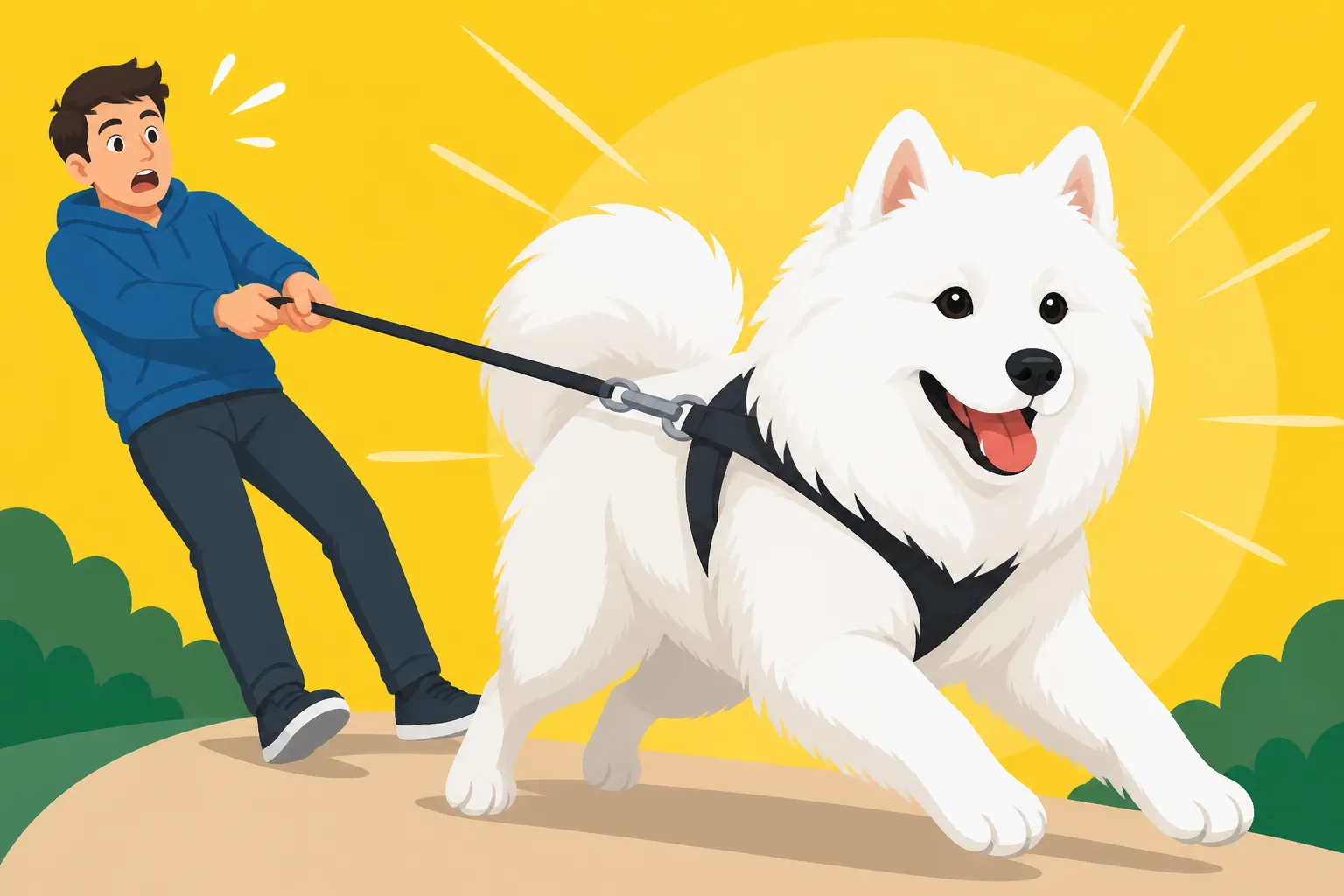
This physical capability is a huge factor in why they pull so effectively. If you're a smaller person, or even if you're quite strong, a determined Samoyed can easily overpower you, especially if you're caught off guard. They have a low center of gravity and powerful hindquarters, perfectly adapted for digging in and propelling themselves forward. This isn't just a matter of manners; it's a genuine safety concern. Losing control of a pulling Samoyed can lead to falls for the handler, or worse, your Samoyed escaping into traffic or a dangerous situation. It's crucial to acknowledge this raw power and approach training with tools and techniques that can manage it effectively. For more on their physical capabilities, you might find How Much a Samoyed Can Pull interesting.
Common Reasons for Pulling Beyond Instinct
While their natural instincts play a huge role, many Samoyeds also develop a habit of pulling due to common training pitfalls and unsuitable equipment. It's not always intentional defiance; sometimes, we inadvertently teach them that pulling actually gets them where they want to go faster.
Lack of Early Leash Training and Consistency
One of the biggest culprits behind a pulling Samoyed is often a shaky foundation in early leash training, or a lack of consistent reinforcement as they grow. When you first bring home that adorable Samoyed puppy, they're tiny bundles of fluff, and a gentle tug feels like nothing. It's easy to let them pull a little, especially when they're excited to explore. But here's the kicker: every single time your Samoyed pulls on the leash and gets to go forward, even just a step, they are being rewarded for pulling. They quickly learn, "Oh, applying pressure to this leash makes me get to that tree, that person, that smell!" This is called positive reinforcement, and it’s a powerful teacher, even if it's teaching the wrong thing.
Inconsistency only compounds the problem. If sometimes you let them pull to the park, but other times you try to correct them, your Samoyed gets confused. They don't understand the rules. They'll keep trying what worked last time, which was pulling. Imagine trying to learn a new language when the grammar rules change daily – it's frustrating and ineffective! A solid, consistent approach from day one, or a committed restart, is essential. Think about taking advantage of resources like BAXTER & Bella's online puppy school for structured, consistent guidance right from the start. For a deeper dive into early training, consider reading The First Year With a Samoyed Puppy.
Improper Equipment: The Wrong Collar Can Make it Worse
The equipment you choose for walking your Samoyed can either be your best friend or your worst enemy. A standard flat buckle collar, while perfectly fine for ID tags, is often completely ineffective for a strong, pulling Samoyed. When your Samoyed pulls against a flat collar, the pressure is distributed across their windpipe and neck, which can be uncomfortable or even dangerous, leading to coughing or choking. More importantly, it provides very little leverage or control for you. Some owners resort to slip leads, choke chains, or even prong collars, which can be effective management tools but come with their own set of considerations. These tools rely on aversive pressure to discourage pulling. While they can stop a dog from pulling, they often don't teach loose-leash walking in a positive way and can cause discomfort or fear if used improperly.
The rise of "no-pull" harnesses has been a game-changer for many Samoyed owners. These harnesses typically have a leash attachment point on the front of the chest. When your Samoyed pulls, the leash redirects their momentum, gently turning them to the side and off-balance. This makes it physically uncomfortable and less efficient for them to pull forward, allowing you to maintain control without causing pain. Head halters are another option, working much like a horse halter, giving you control over the dog's head, and thus, its direction. Finding the right tool for your Samoyed and your handling style is crucial. You can find a vast selection of options, from traditional collars to various no-pull harnesses and head halters, on platforms like Amazon, allowing you to compare features and read reviews before making a choice. For more on equipment considerations, see Whether a No Pull Harness Works on a Samoyed.
Energy Levels and Insufficient Exercise
Samoyeds are not couch potatoes; they are high-energy dogs with an incredible need for physical and mental stimulation. Remember their history? Pulling sleds for miles required immense stamina. If your Samoyed isn't getting enough appropriate exercise, that pent-up energy has to go somewhere, and often, it manifests as frantic pulling on the leash. A quick trot around the block once a day simply isn't going to cut it for most Samoyeds.
When a Samoyed is bursting with unused energy, they hit the leash ready to go, go, go! They're not thinking about polite walking; they're thinking about burning off steam, exploring, and getting their zoomies out. This isn't an intentional act of defiance; it's a dog trying to meet its fundamental needs. If you're consistently battling a pulling Samoyed, take an honest look at their daily routine. Are they getting at least an hour or two of vigorous exercise? This could mean long walks, runs, playtime in a securely fenced yard, or even engaging in dog sports. A tired Samoyed is generally a much more amenable Samoyed on the leash. For tips on managing their energy, refer to How Much Exercise a Samoyed Needs and What a Samoyed Needs Every Day.
Effective Strategies to Teach a Samoyed Loose-Leash Walking
Alright, so we've covered why your Samoyed might be pulling. Now, let's talk about how to actually teach them those elusive loose-leash manners. It's not an overnight fix, but with patience and the right techniques, you can make a huge difference.
Positive Reinforcement and Lure Training
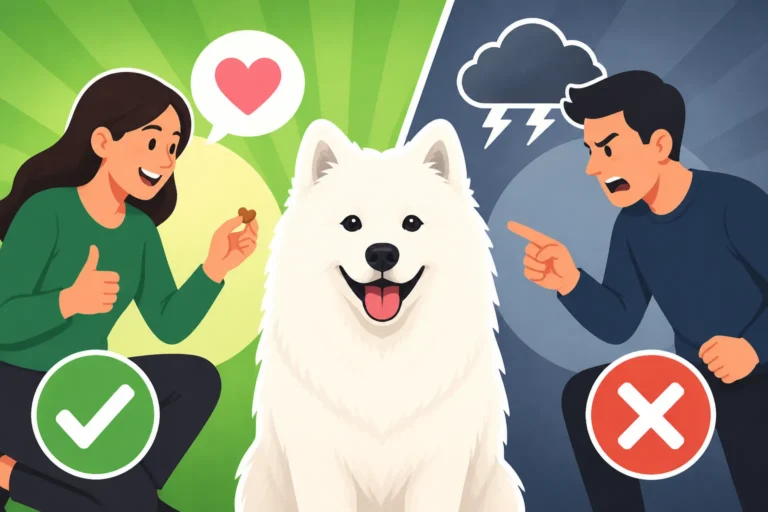
The core of successful loose-leash walking with a Samoyed (or any dog, really) lies in positive reinforcement. This means rewarding the behaviors you want to see, rather than punishing the behaviors you don't. When your Samoyed's leash is slack, even for a second, that's your golden opportunity to reward them.
Here’s a common and effective technique:
- Start in a low-distraction environment: Begin in your quiet backyard or a very calm area.
- The "Be a Tree" Method: This is your secret weapon. The moment your Samoyed pulls, immediately stop walking. Become a "tree"—stand still and silent. Do not move forward until the leash goes slack. This might take seconds, or it might take minutes of your dog staring at you, wondering why the fun stopped. The second the leash loosens, even if it's just for a breath, praise them ("Good! Yes!") and take a step forward. If they pull again, stop again. This teaches them: "Pulling makes us stop. Loose leash makes us go."
- Lure and Reward: Hold a high-value treat (think small pieces of cheese, cooked chicken, or hot dogs) near your Samoyed's nose. Use it to lure them into the "heel" position (walking nicely beside you) with a slack leash. As they walk politely, continuously reward them with treats and praise. Start with just a few steps, then gradually increase the distance.
- Practice frequently, but keep sessions short: Samoyeds can get bored easily. Aim for 5-10 minute training sessions multiple times a day, rather than one long, tedious hour.
- Vary your pace and direction: Dogs, especially Samoyeds, learn to anticipate. Change directions often, speed up, slow down. Every time they adjust to stay with you on a loose leash, reward them. Remember, Training a Samoyed That Finds Obedience Negotiable means you need to make it worth their while!
Choosing the Right Tools for Success
As we discussed earlier, the equipment you use is paramount, especially when you're first teaching loose-leash walking or when you need reliable management in distracting environments.
- Front-Clip Harnesses: These are excellent training tools. Brands like Easy Walk and Freedom No-Pull Harness are popular. The leash clips to a ring on your dog's chest. When your Samoyed pulls, they get gently redirected to the side, making it physically difficult to pull forward. This allows you to walk with more control and less strain, creating a more pleasant experience for both of you. It's a great tool for management while you're actively working on training.
- Head Halters (e.g., Gentle Leader, Halti): These work like a horse's halter, giving you control over your dog's head. Where the head goes, the body follows. They can be incredibly effective for very strong pullers, as they allow for precise control with minimal force. However, some dogs initially dislike them and require a gentle introduction to get comfortable wearing one. Always ensure it's properly fitted to avoid rubbing or discomfort.
It’s important to understand that these are management tools. They help you control pulling in the moment, preventing your Samoyed from rehearsing the unwanted behavior. But they don't teach your dog to choose loose-leash walking on their own. That's where the positive reinforcement training comes in. Ideally, you use the harness or head halter in conjunction with training, gradually phasing it out as your Samoyed learns to walk politely.
Here’s a quick comparison of common equipment options:
| Equipment Type | Pros | Cons | Best For |
|---|---|---|---|
| Flat Buckle Collar | Comfortable for everyday wear, ID tags. | No control for pullers, can injure neck/throat. | Well-trained dogs, ID tags, minimal control needs. |
| Front-Clip Harness | Redirects pulling force, easy to use, generally comfortable. | Can tangle legs if not fitted correctly, doesn't teach directly. | Training strong pullers, preventing pulling, safer than neck collars. |
| Head Halter | Excellent control over the dog's head, minimal physical force. | Some dogs dislike it initially, requires careful introduction. | Very strong pullers, dogs that need precise redirection. |
| Back-Clip Harness | Comfortable, great for light walks and attaching long lines. | Can encourage pulling (like a sled harness), offers less control. | Dogs that don't pull, casual walks, attachment for Whether a Long Line Is Enough for a Samoyed. |
Consistency and Patience Are Key
Training a Samoyed for loose-leash walking is not a one-and-done deal. It's an ongoing commitment that requires immense consistency and patience. Samoyeds are smart, but they are also independent and, let's face it, have a strong will of their own.
- Every Walk is a Training Opportunity: This is crucial. If you allow your Samoyed to pull on one walk but try to train them on another, you're sending mixed signals. Make a conscious decision that every time the leash goes on, it's a chance to practice loose-leash walking. Even if it means your walks are shorter or slower at first.
- Be More Exciting Than the Environment: This is a tall order for a Samoyed, but try! Use your voice, high-value treats, and even toys to keep your Samoyed engaged with you rather than every squirrel or scent. Make yourself the most interesting thing on the walk.
- Don't Get Frustrated: We've all been there, feeling our patience wear thin when our Samoyed lunges for the tenth time. But remember, they respond far better to calm, clear guidance than to anger or harsh corrections. Take a deep breath, reset, and go back to basics.
- Celebrate Small Wins: Did your Samoyed walk politely for three steps? That's a victory! Did they check in with you instead of pulling towards a distraction? Celebrate it! Every little step in the right direction is progress. It’s a marathon, not a sprint, with these wonderful, strong-willed dogs.
When to Seek Professional Help
Sometimes, despite your best efforts, you might feel like you're just not making headway with the pulling. Or perhaps the pulling is so severe that it feels unsafe to even walk your Samoyed. This is absolutely nothing to be ashamed of; in fact, it's a sign of a responsible owner knowing when to ask for expertise.
Recognizing When You're Stuck
There are clear indicators that it might be time to bring in the pros:
- No Progress: You've been consistently applying training techniques for weeks or months, and your Samoyed's pulling hasn't significantly improved.
- Safety Concerns: You're worried about falling, your Samoyed getting loose, or injuring themselves or others due to their pulling.
- Overwhelmed or Frustrated: You dread walks, or you're constantly feeling stressed and upset during them. This negativity can impact your bond with your Samoyed.
- Aggression or Reactivity: If the pulling is accompanied by lunging, barking, or growling at other dogs or people, a professional is definitely needed to address these more complex behavioral issues alongside the pulling.
Remember, Samoyeds are intelligent, but they learn what works. If pulling always gets them somewhere, they'll keep doing it. If you've exhausted your toolkit, it's time for new tools and guidance.
What a Professional Trainer Can Offer
A certified professional dog trainer, especially one experienced with northern breeds like Samoyeds, can be an invaluable resource. They bring a fresh perspective, expert knowledge, and hands-on guidance that can be incredibly difficult to replicate on your own.
Here's what a good trainer can provide:
- Personalized Assessment: They'll observe you and your Samoyed walking, identify specific triggers, and pinpoint the exact mechanics of your Samoyed's pulling. They can evaluate your handling skills and suggest adjustments.
- Customized Training Plan: Generic advice is good, but a plan tailored to your Samoyed's personality, your lifestyle, and your specific challenges will be far more effective. This might include specific exercises, equipment recommendations, and management strategies.
- Hands-On Coaching: A trainer can demonstrate techniques, guide you through corrections in real-time, and help you master the timing of rewards and leash handling. They can also teach your Samoyed more advanced impulse control exercises that might be necessary.
- Problem-Solving Skills: If underlying issues like anxiety, over-arousal, or lack of focus are contributing to the pulling, a professional can help address these deeper behavioral aspects. They can also help with other challenges, such as if your Samoyed talks back when told off or needs more engagement.
- Motivation and Support: Training can be tough, and having a coach to keep you accountable, celebrate your progress, and offer encouragement can make all the difference. For more insights on seeking professional help, you might read Whether a Samoyed Owner Needs a Professional Trainer.
Walking your Samoyed should be an enjoyable experience for both of you, not a daily tug-of-war. With understanding, the right tools, consistent training, and perhaps a little help from an expert, you can transform those challenging pulls into pleasant strolls with your magnificent, smiling companion.
Disclaimer
This article is for general informational purposes only and does not constitute professional advice. Laws, prices and regulations vary by location and change over time. Consult a qualified professional for guidance on your specific situation.