Whether a Samoyed Refuses to Walk in Heat
It's a familiar scene for many Samoyed owners as the seasons change: the sun is shining, the air warms up, and you're ready for a nice long walk with your fluffy white companion. You leash them up, step outside, and they take two steps before flopping down, lagging behind, or giving you that infamous "Samoyed side-eye" that clearly says, "Absolutely not." This guide will dive deep into why your beautiful Samoyed might be putting on the brakes when the mercury rises, and what you can do to help them cope with the heat and still get their much-needed mental and physical exercise.
Understanding Why Heat is Such a Big Deal for Samoyeds
Let's be honest, our Samoyeds are creatures of the cold. They hail from the Siberian Arctic, where temperatures regularly plummet far below freezing. Their entire physiology is geared towards thriving in icy landscapes, which unfortunately means they are inherently disadvantaged when it comes to warmer climates. It's not just them being "stubborn" when they resist a summer stroll; it's a deep-seated survival instinct kicking in.
The Arctic Ancestry and Their Unique Coat
The most obvious reason your Samoyed struggles with heat is their magnificent double coat. This isn't just fluffy decoration; it's an engineering marvel designed by millennia of natural selection to insulate. While we often think of insulation as keeping warmth in, it also works to keep heat out. Imagine trying to wear a thick down parka in July – that's a bit like how your Samoyed feels. Their dense undercoat traps a layer of air that acts as a thermal barrier, protecting them from both extreme cold and, to a lesser extent, intense heat. However, this protection has its limits, especially when combined with high humidity. When the external temperature far exceeds their comfort zone, their coat becomes a liability rather than an asset. You might want to read more about Why a Samoyed's Coat Insulates Against Heat as Well as Cold.
Their guard hairs are stiff and stand off the body, further aiding in air circulation. But in a truly hot and humid environment, this system can quickly become overwhelmed. They simply aren't built for prolonged exposure to the kind of summer heat we experience in many parts of the world. Their ancestors, the Nenets people, relied on them to herd reindeer and pull sleds across frozen tundras, not jog alongside you on scorching pavement. They are truly A Samoyed Built for Sixty Below in an American Summer.
Inefficient Cooling Mechanisms
Unlike humans who sweat profusely across their skin, dogs cool themselves primarily through panting and through the pads of their feet. Samoyeds, with their deep chest and thick coat, have to work extra hard to expel heat. Their short snouts, while not as extreme as a brachycephalic breed, still make their panting slightly less efficient than a long-nosed sighthound, for example. When they pant, they evaporate moisture from their tongues and respiratory tract, which helps cool the blood flowing through those areas. But if the air itself is hot and humid, this evaporative cooling becomes much less effective. The air is already saturated with moisture, so their panting doesn't have as much "dry air" to absorb the evaporated heat, making them overheat much faster.
Their feet also help radiate heat, but if they're walking on hot asphalt or concrete, this mechanism is actually contributing to heat gain rather than loss. The direct contact with scorching surfaces means their body is constantly absorbing more heat, compounding the challenge their internal systems face. This is why you'll often see them seeking out any patch of cool grass or dirt.
Signs Your Samoyed is Actively Refusing a Walk in Heat
It's one thing for your Samoyed to merely slow down, but quite another when they flat-out refuse to budge. Understanding these refusal tactics is key to distinguishing stubbornness from genuine distress. Your Samoyed is a master communicator, and they'll tell you when they've had enough.
The "Samoyed Sprawl" and Lagging Behind
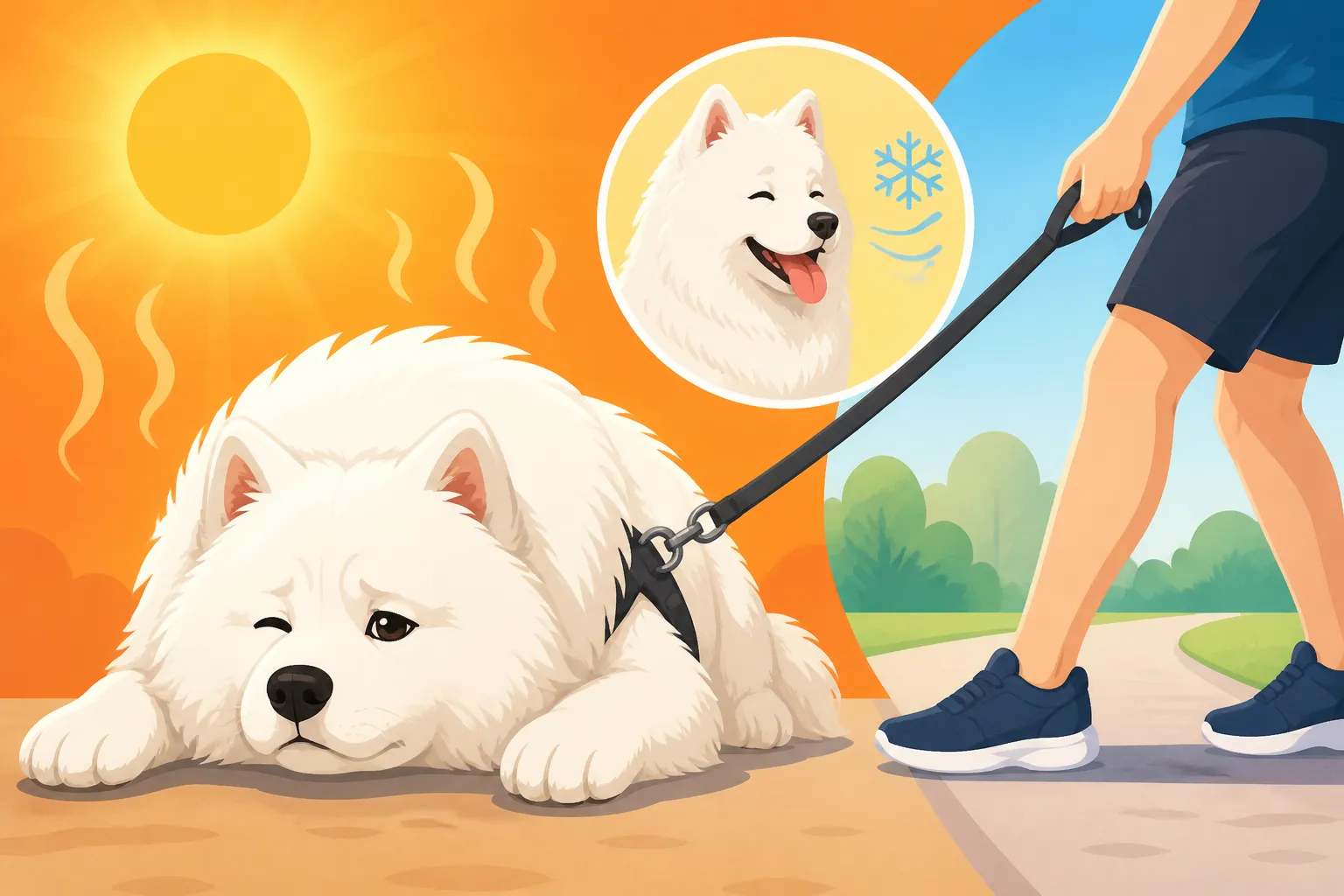
One of the most common signs is the dramatic "Samoyed Sprawl." You've just stepped out the door, and suddenly, your fluffy companion decides the sidewalk is the perfect spot for a nap. They'll lie down, often with a sigh, and give you a look that suggests you're a cruel taskmaster for even suggesting a walk. This isn't just typical Samoyed independent thinking; it's often their way of saying, "I'm already too warm, and I refuse to make it worse." They might also lag significantly behind, dragging their feet, stopping to sniff every blade of grass for an extended period, or constantly seeking out the tiniest sliver of shade offered by a lamppost or parked car.
They might also start trying to pull back towards the house, or constantly redirect you towards areas with more shade or water. If your Samoyed, who usually loves walks, is suddenly making it clear they'd rather be anywhere else, especially in warmer weather, it's time to pay attention. You can learn more about Signs a Samoyed Is Getting Old and how age can influence their heat tolerance.
Subtle to Severe Panting and Seeking Water
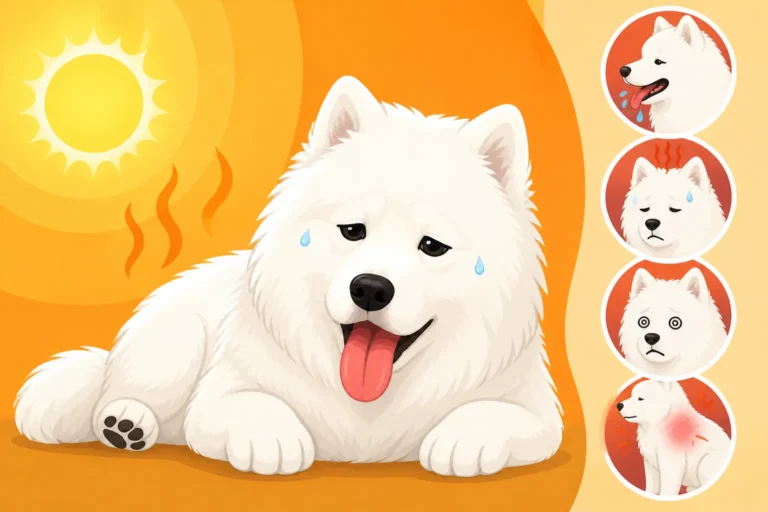
Beyond the physical refusal, observe their breathing. In moderate temperatures, a Samoyed might pant gently after a burst of activity, but it should quickly subside. In heat, however, the panting will be more persistent, deeper, and faster, even with minimal exertion. Watch for their tongue hanging out further than usual, and their gums appearing bright red rather than a healthy pink. They might also begin to drool excessively.
Another tell-tale sign is an increased obsession with water. They might pull towards every puddle, try to dunk their face in a bird bath, or constantly seek out their water bowl if you're close to home. If you're out and about, they'll be much more enthusiastic about drinking from a portable water bottle than usual. These are all clear signals that their body is working overtime to cool down, and they're urging you to find relief. Pay close attention to When a Samoyed's Panting Means Trouble.
Changes in Demeanor
While Samoyeds are generally joyful and mischievous, extreme heat can change their whole vibe. They might become lethargic, less responsive to commands or treats, and even a bit grumpy. That characteristic "Samoyed smile" might be replaced by a more strained, open-mouthed grimace. They might also appear disoriented or uncoordinated. If your usually playful companion seems withdrawn or unusually quiet, especially after being out in the sun, it's a huge red flag that they are struggling significantly. This isn't just a refusal; it's a cry for help.
Strategies for Encouraging and Managing Summer Walks
Okay, so your Samoyed isn't a fan of the heat – we've established that. But they still need exercise and mental stimulation! Completely stopping walks isn't usually an option, nor is it good for them. The key is adaptation and smart planning.
Timing is Everything: Early Morning and Late Evening
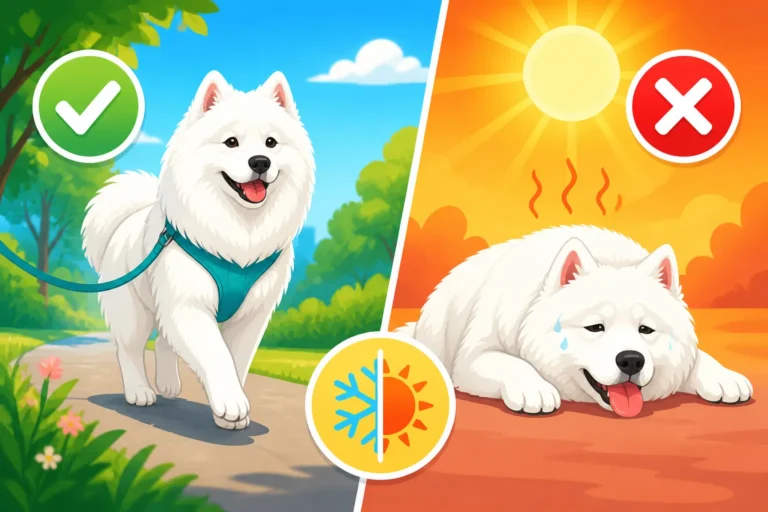
This is hands down the most crucial strategy. Forget midday strolls from late spring through early autumn. Your best bet for a successful and safe walk with your Samoyed is either very early in the morning, before the sun has had a chance to heat everything up, or very late in the evening, after the sun has set and the ambient temperature has dropped.
- Morning Patrol: Aim for walks between 5:00 AM and 7:00 AM. The ground will still be cool, and the air will be at its freshest. This gives them a good burst of activity before the heat becomes oppressive.
- Evening Expedition: After 8:00 PM or 9:00 PM is often ideal, allowing the asphalt and concrete to cool down significantly. Test the pavement with your hand; if it's too hot for you to hold your palm there for seven seconds, it's too hot for their paws.
On truly sweltering days, even these times might be too warm. Always check local weather forecasts for temperature and humidity. Humidity makes it much harder for dogs to cool themselves, so a 75°F day with high humidity can feel much worse to your Samoyed than an 85°F dry day. You should absolutely know How Long a Samoyed Can Be Outside at Ninety Degrees.
Smart Location Choices and Gear
Where you walk is just as important as when. Ditch the sunny sidewalks and bustling city streets for cooler, more natural environments.
- Shaded Trails and Parks: Seek out trails with dense tree cover. The shade from mature trees can make a significant difference in perceived temperature. Grassy areas are also far cooler on paws than pavement.
- Water Access: If possible, walk near a stream, lake, or even a community splash pad where your Samoyed can safely get their feet wet or even take a shallow dip. This is an excellent way for them to cool down their core body temperature. Whether a Samoyed Should Swim to Cool Off is a good question to ponder.
- Cooling Gear: While no single piece of gear is a magic bullet, some can help.
- Cooling Vests/Bandanas: These vests work by evaporative cooling. You wet them, wring them out, and the evaporation helps draw heat away from the dog's body. However, with a Samoyed's thick double coat, ensure the vest is genuinely making contact with their skin to be effective, and don't expect miracles. Some owners find they only add another layer of insulation, so monitor your dog closely.
- Booties: Paw protection is critical. Even early morning pavement can hold residual heat. Dog booties, like those from Ruffwear, can protect their sensitive paw pads from scorching surfaces.
- Portable Water Bowls: Always carry water with you. A collapsible bowl that clips to your leash or belt is invaluable. Offer water frequently, not just when you notice them panting heavily. Brands like Chewy or Amazon offer a huge selection of these.
When to Modify or Ditch the Walk Entirely
Sometimes, despite your best efforts, it's just too hot. Or perhaps your Samoyed is having an "off day" and just doesn't feel up to it. Recognizing when to shorten the walk, or skip it altogether, is crucial for their health and well-being.
- Shorten It Up: Instead of your usual mile-long trek, opt for a quick 10-15 minute potty break and a sniff-around in the coolest part of your yard. Mental stimulation can sometimes be just as tiring as physical exercise, so a shorter sniff-walk can still be beneficial.
- Indoor Activities: On truly scorching days, prioritize indoor enrichment. Puzzle toys, training sessions, hide-and-seek with treats, or even just learning new tricks can provide mental stimulation without the heat risk. You might be surprised at What a Bored Samoyed Does to a House if they don't get enough activity.
- Cooling Mats and AC: Ensure your home environment is a sanctuary from the heat. A cooling mat placed in a favorite spot can offer immense relief. Keep the air conditioning running at a comfortable temperature. Your Samoyed will thank you. Whether a Cooling Mat Helps a Samoyed is a resounding yes for many owners. For more information, read What Air Conditioning Adds to a Samoyed Household.
- Swimming: If you have safe access to a pool (with proper safety precautions, like a ramp for exit) or a calm body of water, swimming can be a fantastic way for a Samoyed to exercise and cool down simultaneously. Always supervise closely.
- "No-Walk" Days: It's okay to have "no-walk" days. If your Samoyed is actively resisting, heavily panting with minimal effort, or showing any signs of distress, do not push them. A missed walk is far better than a trip to the emergency vet for heatstroke. Understanding Signs a Samoyed Is in Heat Distress is paramount.
Here's a quick guide to help you decide:
| Condition | Action for Samoyed Owners | Why |
|---|---|---|
| Morning/Evening < 65°F (18°C), low humidity | Go for a normal walk. Monitor for exertion. | Ideal conditions for a Samoyed. |
| Morning/Evening 65-75°F (18-24°C), low humidity | Keep walks shorter (20-30 min), stick to shade, bring water. Check pavement. | Still manageable, but heat stress begins to be a factor. |
| Morning/Evening 75-80°F (24-27°C), moderate humidity | Very short potty breaks only (10-15 min) in deep shade. Consider indoor exercise. Check pavement meticulously. | Significant risk. Even early/late, surfaces can hold heat. |
| Anytime > 80°F (27°C) OR high humidity (even lower temps) | DO NOT WALK. Only brief potty breaks in the coolest part of the yard. Focus on indoor enrichment. | High risk of overheating and heatstroke. Samoyeds struggle immensely in these conditions. |
| Pavement too hot to touch for 7 seconds | DO NOT WALK. Paws can burn, leading to pain and further heat absorption. | Direct heat transfer to paws is dangerous and increases overall body temperature. |
| Samoyed is lethargic, excessively panting, seeking shade/water, dragging feet. | STOP IMMEDIATELY. Get to a cool, shaded area. Offer water. If signs worsen, seek veterinary attention without delay. | These are signs of heat stress and potential heatstroke. Ignoring them can be fatal. |
When to Seek Veterinary Advice
While refusal to walk is often a sign of discomfort, it can sometimes escalate to a medical emergency. Samoyeds are particularly vulnerable to heatstroke, and it can be fatal if not treated quickly.
Recognizing the Dangers of Heatstroke
Heatstroke is not just "feeling hot"; it's a severe condition where a dog's body temperature rises to dangerous levels, causing organ damage and potentially death. Early recognition is vital. Beyond the heavy panting and refusal to move, look for these more severe signs:
- Excessive drooling, very thick or stringy saliva
- Bright red gums, or pale/bluish gums in severe cases
- Rapid or irregular heartbeat
- Weakness, staggering, or collapse
- Vomiting or diarrhea (sometimes with blood)
- Disorientation, confusion, or seizures
- Unconsciousness
If you see any of these symptoms, consider it an emergency. Get your Samoyed to the coolest possible environment immediately, offer small amounts of water, and apply cool (not ice cold) water to their body, especially their belly and paw pads. Crucially, call your vet en route so they can prepare for your arrival. Whether Heat Kills More Samoyeds Than Disease is a question that highlights the severity of this risk.
Underlying Health Conditions
Sometimes, a sudden and profound aversion to heat or a dramatic decline in activity could be indicative of an underlying health issue. Older Samoyeds, for example, might be more susceptible to heat due to conditions like Aortic Stenosis in a Samoyed or Diabetes in a Middle Aged Samoyed, which can affect their circulatory system or overall energy levels. A dog with hip or elbow issues might find walking on hard, hot surfaces particularly painful, even if the temperature is tolerable for a younger, healthier dog. If your Samoyed's behavior is drastically different from previous summers, or if their heat intolerance seems to be worsening year after year, it's always a good idea to schedule a check-up with your veterinarian. They can assess for any health concerns that might be contributing to their struggles in the heat.
Ultimately, your Samoyed is relying on you to be their advocate. Their refusal to walk in the heat isn't defiance; it's a genuine plea for help. By understanding their unique needs, adapting your routine, and staying vigilant for signs of distress, you can ensure your beloved companion remains happy, healthy, and safe all summer long.
Disclaimer
This article is for general informational purposes only and does not constitute professional advice. Laws, prices and regulations vary by location and change over time. Consult a qualified professional for guidance on your specific situation.