Whether a Samoyed Father Can Pass It to His Sons
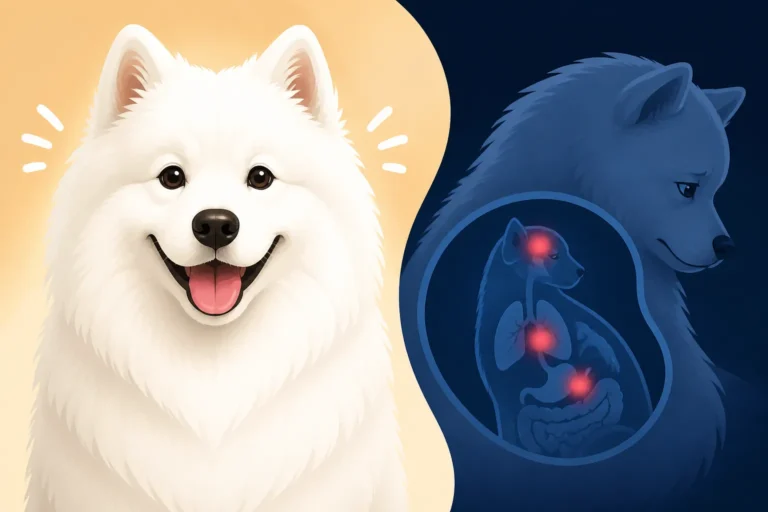
The worry that a beloved Samoyed might inherit a debilitating health condition is a heavy burden for any owner or prospective buyer. One of the most heartbreaking issues in the breed is Samoyed Hereditary Glomerulopathy (SHG), a kidney disease that primarily affects males. When contemplating breeding or acquiring a puppy, a common and perfectly valid concern revolves around the father's potential to pass this devastating gene to his male offspring. This guide will meticulously break down the genetics of SHG to explain precisely why a Samoyed father cannot directly pass this specific kidney disease to his sons, and who truly carries the genetic responsibility.
Understanding Samoyed Hereditary Glomerulopathy's Genetic Basis
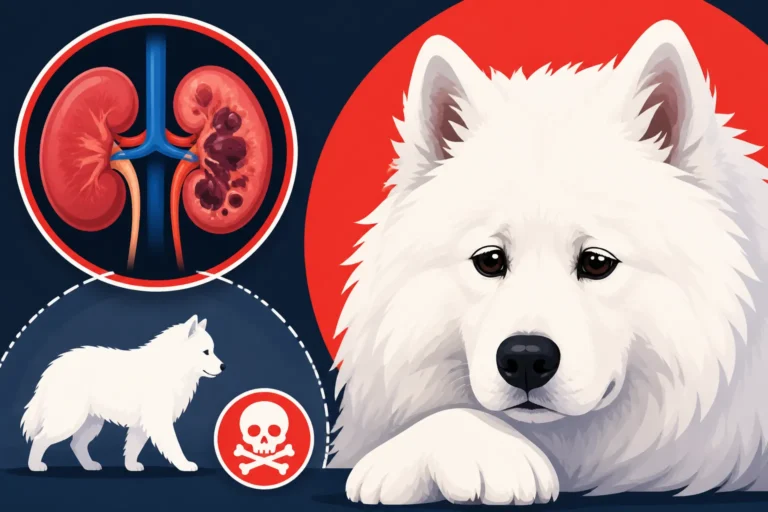
Samoyed Hereditary Glomerulopathy (SHG) is a serious, often fatal, kidney disease that has plagued the Samoyed breed for generations. It’s caused by a mutation in the COL4A5 gene, which is critical for the proper formation of Type IV collagen. This specific collagen is a major component of the basement membranes in the kidney's glomeruli, the tiny filters responsible for removing waste from the blood. When this gene is mutated, the collagen doesn't form correctly, leading to progressive kidney failure. The frustrating part, for many, is understanding how it passes down, especially given its male-specific severity. You might have heard whispers of The Kidney Disease That Kills Samoyed Males Before Fifteen Months or Why Samoyed Hereditary Glomerulopathy Only Devastates the Boys, and it all comes back to a specific mode of inheritance.
The Critical Role of X-Linked Inheritance
The reason a Samoyed father cannot pass SHG to his sons lies in its classification as an X-linked recessive disorder. This isn't just a fancy genetic term; it's the key to understanding how the disease travels through generations. Dogs, like humans, have sex chromosomes: females have two X chromosomes (XX), and males have one X and one Y chromosome (XY). The COL4A5 gene, responsible for SHG, is located on the X chromosome. This chromosomal location dictates everything about its inheritance pattern.
Because males only have one X chromosome, if that single X carries the mutated COL4A5 gene, they will develop the disease. There's no "backup" X chromosome to compensate for the faulty gene. This is why you hear about The Age a Samoyed Male First Shows Kidney Signs, often leading to premature death. Females, on the other hand, have two X chromosomes. If one X carries the mutation, the other healthy X chromosome can often compensate, making them carriers but typically unaffected or only very mildly affected later in life. This differential impact is a cornerstone of X-linked conditions.
Why a Father Cannot Pass It to His Sons
This is where the biology gets fascinating and offers a specific answer to our burning question. When a male Samoyed reproduces, he passes on either his X chromosome or his Y chromosome to his offspring. To his sons, he can only ever pass his Y chromosome. The son receives his X chromosome exclusively from his mother.
Think of it this way: the Y chromosome determines maleness. If a sperm carries a Y chromosome, the resulting embryo will be male (XY), with the X chromosome coming from the egg. Since the COL4A5 gene responsible for SHG is on the X chromosome, and the father only passes his Y to his sons, it is genetically impossible for a Samoyed father to directly transmit the SHG gene to his male puppies. This fundamental biological truth is a huge relief to understand when you're navigating the complexities of Samoyed health. While a father might carry the gene, it's irrelevant for his sons. However, the exact opposite is true for his daughters, who will always inherit his X chromosome.
The Mother's Indisputable Role in SHG Transmission
While the father might be off the hook for directly passing SHG to his sons, the mother's genetic contribution is paramount. She is the crucial link in the chain of transmission for this X-linked disorder. Understanding her role is vital for both breeders aiming to produce healthy puppies and prospective owners seeking to avoid this devastating condition. The information you seek about Whether a Samoyed Male Inherits the Gene From His Mother confirms that the maternal line is the one to watch.
The Carrier Female Samoyed
A female Samoyed is considered a "carrier" if she has one normal COL4A5 gene on one X chromosome and one mutated COL4A5 gene on her other X chromosome. Because she has a healthy gene, she typically doesn't suffer from the severe, early-onset kidney failure that affects males. Her second, functional X chromosome provides a protective effect, allowing her kidneys to function much more effectively. However, this doesn't mean she's completely free of risk; some carrier females may show very mild signs of kidney disease much later in life, but it's usually not life-threatening in the same way it is for affected males. The nuance of Why a Carrier Female Samoyed Stays Mild is crucial here.
The real significance of a carrier female lies in her ability to pass the mutated gene to her offspring. Each time she produces an egg, there's a 50/50 chance that the egg will contain either her normal X chromosome or her X chromosome carrying the mutated SHG gene. This genetic lottery has profound implications for the health of her puppies.
How a Carrier Mother Passes SHG to Her Sons
When a carrier female breeds with a healthy male, the outcomes for their puppies, particularly the males, are significant:
- For Sons: Each son has a 50% chance of inheriting the mother's X chromosome with the mutated gene. If he does, he will be an affected male, as he has no other X chromosome to compensate. This is the tragic pathway for affected Samoyed males. If he inherits the mother's healthy X chromosome, he will be completely clear of the disease. This is why What Samoyed Hereditary Glomerulopathy Does to the Kidneys is such a serious concern, exclusively impacting males this way.
- For Daughters: Each daughter has a 50% chance of inheriting the mother's X chromosome with the mutated gene. If she does, she will be a carrier, just like her mother. She also has a 50% chance of inheriting the mother's healthy X chromosome, making her completely clear. Regardless of which X she gets from her mother, she will receive a healthy X from her father (since a male without the disease has two healthy sex chromosomes: XY, with the X being healthy). Therefore, a daughter can never be affected by SHG, only a carrier or clear.
This table illustrates the possible outcomes when a carrier female (X^X) is bred to a healthy male (XY):
| Offspring Sex | X Chromosome from Mother | Y/X Chromosome from Father | Resulting Genotype | Phenotype (Disease Status) |
|---|---|---|---|---|
| Son | X^ (mutated) | Y | X^Y | Affected Male |
| Son | X (normal) | Y | XY | Healthy Male |
| Daughter | X^ (mutated) | X (normal) | X^X | Carrier Female |
| Daughter | X (normal) | X (normal) | XX | Healthy Female |
Note: X^ represents an X chromosome carrying the mutated COL4A5 gene.
This table makes it crystal clear: the responsibility for affected male puppies always traces back to the carrier mother.
Preventing SHG: The Breeder's Ethical Imperative
Given the devastating nature of Samoyed Hereditary Glomerulopathy, ethical breeding practices are paramount. Breeders have a moral and professional obligation to prevent the production of affected puppies. This isn't just about avoiding financial loss; it's about the well-being of the dogs and the emotional toll on their future families. Many new owners are just learning about the potential health issues of the breed, and companies like Healthy Paws exist to help manage unexpected health costs, but prevention is always the best medicine.
Essential Genetic Testing for Breeding Dogs
The good news is that advancements in canine genetics have provided breeders with powerful tools to combat SHG. The COL4A5 gene mutation that causes SHG can be identified through a simple DNA test. This test is an absolute game-changer and should be a non-negotiable part of any Samoyed breeding program. Prospective buyers should always ask about The COL4A5 Test Every Samoyed Buyer Should Ask About or Whether a Samoyed Puppy Should Be Tested Before Purchase.
The test determines whether a dog is:
- Clear: Meaning they have two normal COL4A5 genes (XX for females, XY for males where the X is normal).
- Carrier: Meaning a female has one normal and one mutated COL4A5 gene (X^X). Males cannot be carriers in the same sense; if they have the mutated gene, they are affected.
- Affected: Meaning a male has the mutated COL4A5 gene on his single X chromosome (X^Y).
Reputable breeders will proactively test all their breeding stock, particularly the females, before making any breeding decisions. Whether a Samoyed Breeder Must Test Every Female is a question with a resounding "yes" if the goal is to eradicate SHG.
Responsible Breeding Strategies
Once a breeder knows the genetic status of their Samoyeds, they can make informed decisions to prevent SHG. The primary strategy revolves around avoiding breeding carrier females to any male if the goal is to produce completely clear offspring or at least avoid affected males.
Here's how ethical breeders approach it:
- Breeding Clear Females: A clear female (XX) bred to any male (clear, carrier, or even affected, though an affected male would not be used) will never produce affected sons. All sons will inherit her healthy X chromosome. Her daughters will inherit one healthy X from her. If bred to a carrier male (a rare scenario for a male to be a carrier, as they are affected if they have it), daughters could be carriers but would receive a healthy X from her.
- Breeding Carrier Females (with caution): While ideally, carrier females might be phased out of a breeding program, sometimes a carrier female possesses exceptional qualities in temperament, structure, or other health clearances that make her valuable to the breed's overall gene pool. In such cases, she must only be bred to a clear male. Even then, there's a 50% chance that her daughters will be carriers, and a 50% chance her sons will be affected. This means half the males in the litter would suffer from SHG. Therefore, this pairing is generally avoided entirely if at all possible, as it still produces affected males.
- Avoiding Affected Males in Breeding: An affected male (X^Y) should never be used for breeding, not only because he will be severely ill and likely die young, but also because he would pass his X^ chromosome to all his daughters, making them all carriers.
The ultimate goal for breeders is to eventually breed only clear Samoyeds, systematically reducing the prevalence of the mutated gene in the population. How a Samoyed Breeder Avoids Producing Affected Males highlights the direct link between informed genetic testing and responsible mating selections. Insurance providers like Healthy Paws can help cover unexpected medical costs, but responsible breeding dramatically reduces the chances of needing such extensive care for genetic diseases.
Beyond the Genetics: Practical Considerations
Understanding the specific genetic pathway of Samoyed Hereditary Glomerulopathy is crucial, but it's just one piece of the puzzle for responsible pet ownership and ethical breeding. There are broader implications for how we care for Samoyeds and how we ensure the future health of the breed.
The Importance of Ongoing Research and Advocacy
The Samoyed community, alongside veterinary researchers, continues to work tirelessly on understanding and mitigating genetic health issues. Organizations like the Samoyed Club of America play a vital role in promoting health testing, funding research, and educating members. The identification of the COL4A5 gene and the development of a DNA test were monumental achievements born from such dedication. Continued advocacy ensures that breeders have the most up-to-date information and tools at their disposal. This proactive approach helps to preserve the health and longevity of the breed, contributing to The Twelve to Fourteen Years a Samoyed Lives that we all hope for our companions.
Furthermore, awareness among the general public and prospective Samoyed owners is equally important. Knowing to ask questions about health clearances, including the SHG DNA test, empowers buyers to make informed choices and encourages breeders to adhere to high standards. Don't be shy about asking a breeder about their protocols and what The DNA Test That Finds the Samoyed Kidney Gene they use.
The Role of Pet Insurance and Proactive Veterinary Care
Even with the best breeding practices, genetic predispositions can exist, and accidents or other illnesses can strike. This is where comprehensive pet insurance, like plans offered by Healthy Paws, can provide an invaluable safety net. While the primary goal is prevention, knowing you have financial support for unforeseen health challenges can offer immense peace of mind. Many Samoyed owners consider it an essential part of their budgeting for their furry family members.
Beyond insurance, regular veterinary check-ups are non-negotiable. Even healthy Samoyeds benefit from routine screenings, bloodwork, and urine tests. For a Samoyed, early detection of any health concern, especially those related to organ function like kidneys, can be critical. Your vet can advise you on Whether a Samoyed Needs Yearly Kidney Bloodwork and monitor for any subtle changes that might indicate an issue. Keeping an eye on your dog's drinking and urination habits can be an early indicator of kidney issues, even for a carrier female who might experience very mild, late-onset symptoms.
Debunking Misconceptions
It's easy for complex genetic information to get muddled. One common misconception might be a blanket fear of all Samoyeds or an oversimplification of who is "at fault." It's crucial to remember that SHG is an X-linked recessive trait, and the father's role in passing it to his sons is anatomically impossible. His X chromosome goes to his daughters, not his sons. Blame or misdirection of concern can detract from the real solutions: diligent testing of breeding females and thoughtful mating choices. Understanding Why Collagen Failure Destroys a Samoyed's Kidney or What Samoyed Hereditary Glomerulopathy Does to the Kidneys empowers you to be an informed advocate for your Samoyed.
The more knowledge we have as owners and enthusiasts, the better we can support responsible breeding, ensure healthy puppies, and provide our Samoyeds with the longest, happiest lives possible.
Disclaimer
The information provided in this guide is intended for educational purposes only and should not be considered a substitute for professional veterinary advice. Always consult with a qualified veterinarian for any health concerns or before making any decisions about your pet's care. Genetic testing results and breeding decisions should be made in consultation with veterinary geneticists and experienced breeders.