Whether a Samoyed Chases Livestock
It’s a common scenario that many Samoyed owners, particularly those new to the breed or living in more rural areas, grapple with: the delightful, fluffy Samoyed, known for its gentle nature and "smile," suddenly transforming into a driven hunter when confronted with farm animals. This isn't just a nuisance; it can be incredibly dangerous for both your cherished dog and the livestock involved. Understanding the deep-seated instincts behind why a Samoyed might chase livestock and learning how to manage these powerful drives is crucial for a harmonious household, especially if you live where chickens roam or sheep graze. This guide will help you unpack those instincts and provide actionable steps to keep everyone safe.
The Samoyed's Ancient Roots and Instinctual Drives
Many of us look at our Samoyeds lounging gracefully on the couch, all floof and friendly demeanor, and it's hard to imagine them as anything but a loving companion. But beneath that plush exterior lies a history of working dogs, forged in the harsh, expansive landscapes of Siberia. These aren't instincts that simply vanish with a change of scenery or a few generations of pet life; they're deeply woven into the fabric of the breed.
More Than Just a Pretty Face: The Samoyed's Original Job
To truly understand why your Samoyed might eye that flock of chickens with intense interest, we need to take a trip back in time to their origins with the Nenets people of Siberia. The Nenets of the Yamal Peninsula Bred the Samoyed for a very specific purpose: to work with their reindeer herds. This wasn't herding in the way a Border Collie meticulously gathers and directs sheep; it was a more expansive, free-ranging type of work. Samoyeds helped keep the vast herds together, moving them from pasture to pasture, and, crucially, protected them from predators like wolves and bears. They weren't just fluffy companions; they were vital working partners for survival in an unforgiving environment.
Think about it: a dog bred to keep large, semi-wild animals together and safe from danger needed a certain level of assertiveness, quickness, and keen observation. While they also famously shared the tents with their human families for warmth and companionship, this didn't dilute their working drive. In fact, it honed their ability to understand and cooperate with humans, making them highly trainable for their purposes, though perhaps not always our modern expectations. These ancient roles mean that while your Samoyed might be a cuddle bug indoors, outdoors, those ancestral drives can kick in with surprising intensity. You might even discover The Herding Instinct Nobody Expects From a Samoyed simmering just below the surface.
Decoding Instinct: Herding, Prey Drive, and Curiosity
When we talk about dogs chasing livestock, it's often a blend of several distinct, yet interconnected, instinctual drives. It's not always as simple as "bad dog doing a bad thing."
Firstly, there's the herding instinct. For Samoyeds, this was historically about gathering and protecting. They weren't necessarily nipping heels constantly, but rather circling, blocking, and using their presence to influence the movement of the reindeer. When a Samoyed sees a group of animals scatter, this can trigger a deep-seated urge to gather them, to bring them back together. The act of chasing can feel intensely rewarding to a dog with this drive, even if they don't know why they're doing it, or what to do after they've "gathered" them.
Then there's prey drive. This is distinct from herding. Prey drive involves the full predatory sequence: orient, eye, stalk, chase, grab-bite, kill-bite, dissect, consume. While most modern Samoyeds won't go through the entire sequence, especially not the kill-bite on larger animals, the chase component is incredibly powerful. The sight of a small, fast-moving animal like a chicken, a rabbit, or even a small lamb can ignite this drive almost instantaneously. The sudden movement, the panicked flight – it all feeds into that ancient hunting instinct. For a Samoyed, a chicken running might look less like "food" and more like an incredibly fun, fast-moving toy that they simply must catch.
Finally, there's simple curiosity and play. Especially with younger Samoyeds, an initial approach to livestock might be driven by nothing more than wanting to investigate this new, interesting thing. However, if the livestock reacts by running, this innocent curiosity can quickly flip a switch and activate either the herding or prey drive, escalating into a full-blown chase. The distinction between these drives is important because it influences how we approach training and management. A dog with a strong herding drive might be redirected, while a dog with an intense prey drive needs far more stringent control and prevention.
The Reality on the Farm: What to Expect from a Samoyed Around Livestock
It's one thing to understand the theory of instinct, and another entirely to witness it firsthand. The moment your Samoyed locks eyes with a chicken or a sheep, you'll see a shift in their demeanor that can be both fascinating and terrifying.
From Innocent Curiosity to Full-Blown Chase
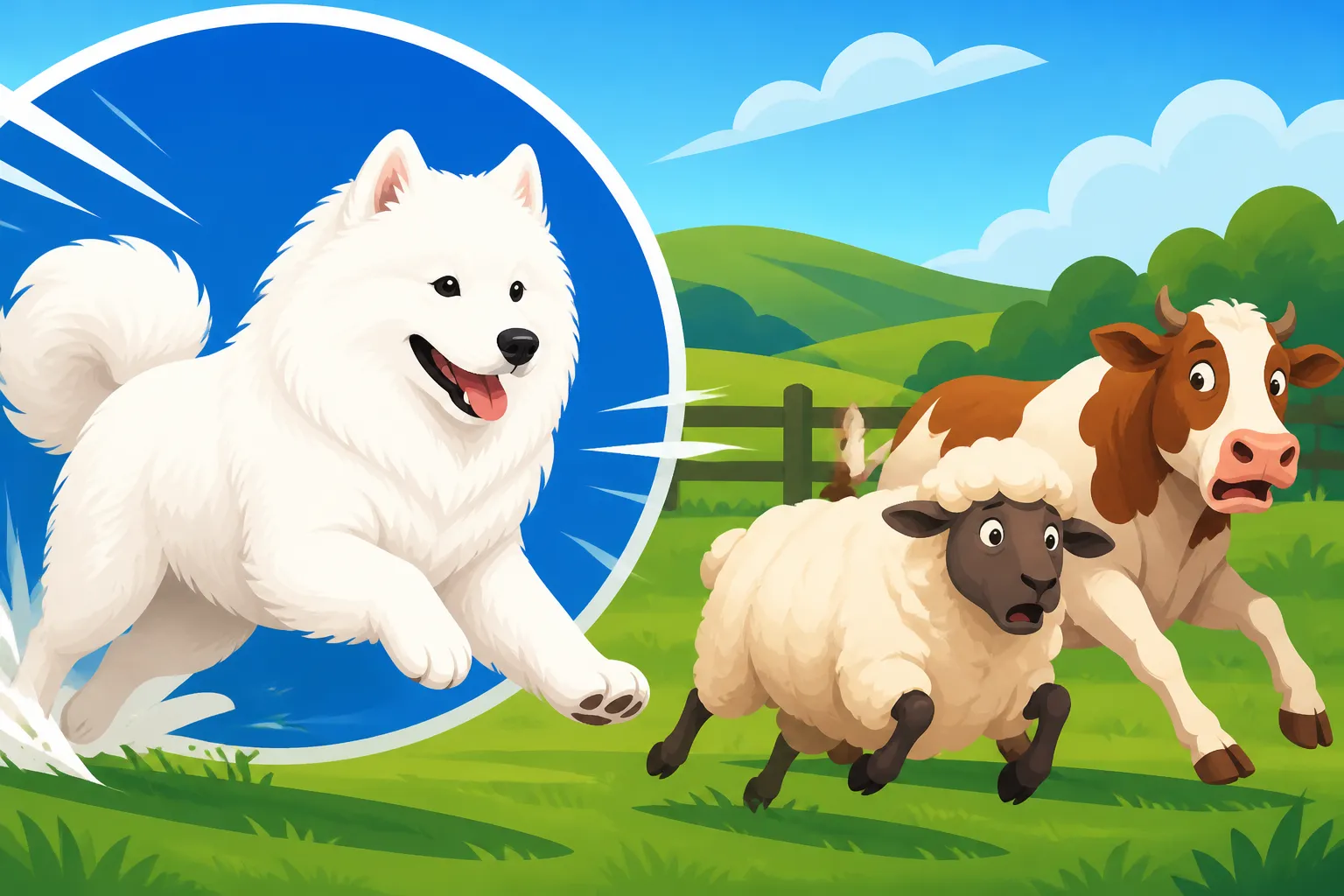
Imagine this: you've just moved your Samoyed, who's always been perfectly behaved in the city park, to a charming hobby farm in rural Oregon. One sunny afternoon, you let them out into the yard, confident in your tall fence. Suddenly, a neighbor's flock of chickens, having found a tiny gap in the fence you didn't know existed, waddles into view. Your Samoyed, usually so calm, goes rigid. The "Samoyed smile" might even be plastered on their face, but their eyes are laser-focused, their tail might be twitching, and their body language is all about intense anticipation. The moment one chicken squawks and darts, it's over. Your Samoyed is off, a white streak across the grass, barking and driving the chickens into a frenzied panic.
This isn't maliciousness; it's instinct. The sheer joy and exhilaration your Samoyed feels during such a chase can be immense. They were bred to be powerful, agile, and to cover ground quickly – traits perfectly suited for a chase. What starts as a curious sniff can escalate in a split second. Even if they don't intend to harm, the chase itself can cause immense stress, exhaustion, and even injury to the livestock. Remember, for a Samoyed, the chase is the reward. This is why attempting to call them back in such a high-arousal state is often futile; their brains are flooded with adrenaline and instinct. This brings us to a crucial point about the breed: Why a Samoyed's Recall Cannot Be Trusted when prey drive or herding instinct takes over. They simply don't hear you in that moment.
The Dangers to Livestock and Your Samoyed
The consequences of an unmanaged Samoyed around livestock can be dire, and it’s important to acknowledge the very real risks involved for all parties.
For the livestock, even if your Samoyed is "just playing" or "just chasing," the impact can be devastating. Small animals like chickens, ducks, and rabbits can suffer heart attacks from the sheer terror of being chased. They can be trampled, pecked, or run into fences in their panic. Lambs and goat kids, even if not directly bitten, can be separated from their mothers, become injured, or succumb to stress-induced illness. Larger animals like sheep, goats, or even calves can be stressed to the point of miscarriage or reduced milk production. And, tragically, direct physical injury or death from bites, even if accidental, is a very real possibility, especially with smaller or weaker animals.
For your Samoyed, the dangers are also significant. A panicked cow or horse can kick with incredible force, inflicting serious injuries or even death. Ramming sheep or goats can also injure a dog. If your Samoyed chases livestock off your property, they could get lost, hit by a car, or wander into dangerous territory. Beyond physical harm, there are serious legal ramifications. Depending on where you live, "livestock worrying" laws can be quite strict, leading to fines, compulsory euthanasia of your dog, or even you being held liable for the value of the lost or injured animals. This isn't just a matter of convenience; it's a matter of safety and legality for everyone involved. The emotional toll on an owner who experiences such an event, whether it's injured livestock or an injured dog, is profound.
| Instinctual Drive | Primary Goal | Typical Behaviors | Impact on Livestock (Example) | Training Approach |
|---|---|---|---|---|
| Herding (Ancestral) | Keep group together | Circling, blocking, intense focus, vocalization | Scattering, stress, potential accidental injury (e.g., sheep being run into a fence) | Focus on impulse control, redirection, strong "leave it" command |
| Prey Drive (Modern Expression) | Catch/pursue prey | Chasing, stalking, pouncing, nipping, mouth engagement | Injury, death, severe stress, stampede (e.g., chickens being caught and shaken) | Stringent containment, strong recall, desensitization, professional guidance |
| Curiosity/Play | Explore, interact | Sniffing, playful nudging, attempting to engage with movement | Minor disruption, potential stress, can quickly escalate to other drives | Early socialization, controlled exposure, making livestock "boring" |
Strategies for Management and Training Around Farm Animals
Living with a Samoyed where livestock is present requires vigilance, consistent training, and a deep understanding of their innate drives. It's not a set-it-and-forget-it situation; it's an ongoing commitment to management and safety.
Containment is King: Fortifying Your Boundaries
When it comes to a Samoyed and livestock, the first line of defense is always physical containment. You simply cannot trust their instincts not to kick in, especially if they are young or haven't had extensive training. This means you need to be realistic about your environment and fortify it against escape.
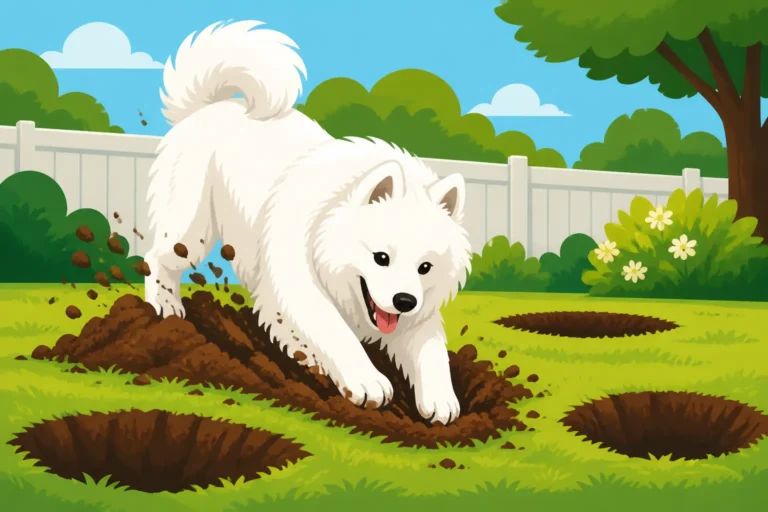
Firstly, let's talk fencing. A four-foot fence might contain a lazy lapdog, but for a Samoyed with a mission, it's often barely a suggestion. How High a Samoyed Can Jump a Fence can be surprising, and they're also notorious diggers. We've seen Samoyeds dig tunnels worthy of a prison break, so merely having a fence above ground isn't enough. Consider burying wire mesh along the bottom of your fence line, or laying heavy rocks or railroad ties to discourage digging. A fence should ideally be at least six feet high, solid, and regularly inspected for weaknesses. Remember, a determined Samoyed, especially one with a strong drive, can be incredibly ingenious when it comes to finding a way out of an enclosure. This is why you need to consider How a Samoyed Gets Out of Anything You Build and plan accordingly.
Gates are another common weak point. Make sure all gates have secure, Samoyed-proof latches. Better yet, consider double-gating important areas, creating a small antechamber where your dog can wait safely while one gate is opened and closed. Never assume a gate is secure just because it's latched; test it regularly.
Finally, and perhaps most importantly, supervision is non-negotiable. Even with the most robust fencing, a Samoyed should ideally never be left unsupervised if there's any chance of livestock interaction. When you can't actively supervise them outdoors, a secure crate or a fully enclosed, dog-proof kennel run is your best friend. Whether a Samoyed Puppy Should Be Crated is not just about house-training; it's a vital safety tool for management throughout their lives. Investing in What a Crate Sized for a Samoyed Costs is an investment in peace of mind.
Intensive Training and Desensitization
While containment is the foundation, training is the ongoing work that helps build a dog who can cope better with the presence of livestock, even if total off-leash reliability is never guaranteed.
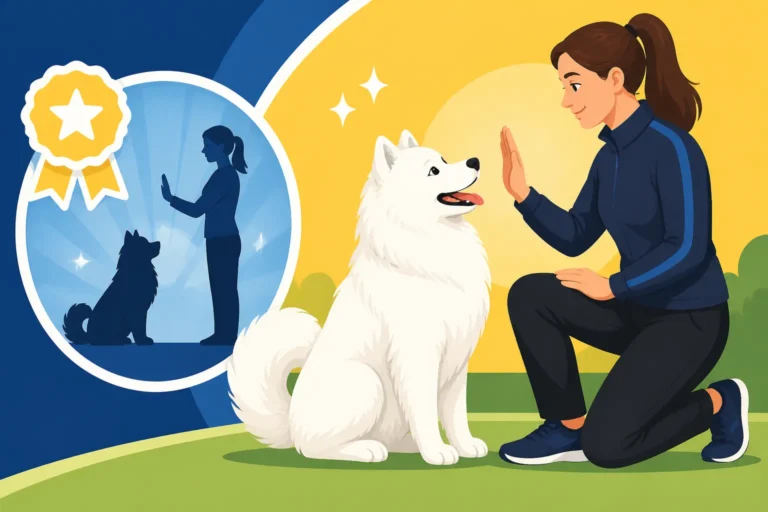
Start with early and consistent positive reinforcement training. This means building a strong foundation of obedience long before livestock is even in the picture. Commands like "sit," "stay," and especially "leave it" are paramount. Your "leave it" command needs to be ironclad, practiced with increasingly high-value distractions, from a dropped treat to a moving toy. The goal is for your Samoyed to be able to disengage from something tempting on cue.
Your recall must be absolutely stellar. This is one command where a Samoyed's inherent independence can be a challenge, as What Actually Motivates a Samoyed might not always be what you have in your pocket. You need to find their absolute highest-value rewards – whether it's a specific squeaky toy, a piece of cooked chicken, or a crazy chase game – and use them only for recall practice, especially around distractions. Practice recall in progressively more distracting environments, but remember that the ultimate test of a running sheep might be beyond even the best-trained Samoyed. This is why Whether a Samoyed Can Ever Be Off Leash around livestock is a serious question you must answer honestly for your dog.
Leash training and long lines are invaluable tools. Even in a fenced yard, if livestock is present, your Samoyed should probably be on a leash, especially during initial introductions or if you're not actively engaged with them. A long line (15-30 feet) allows your Samoyed a sense of freedom to explore while still giving you the ability to intervene instantly. You can find durable, high-quality long lines on platforms like Amazon, which are essential for safe, controlled outdoor excursions. Practice calling your Samoyed back while they are on the long line, gently reeling them in if they don't respond immediately, and always reward heavily when they do return. Whether a Long Line Is Enough for a Samoyed depends entirely on the situation and the dog's training level.
Controlled exposure and desensitization are key for dogs who will routinely be around livestock. This means introducing your Samoyed to the sight and sounds of livestock from a safe distance, initially on a leash, and rewarding calm behavior. The goal is to make the livestock "boring." You want your Samoyed to see the sheep, acknowledge them, and then choose to focus on you instead. Increase proximity and duration very, very slowly, always under strict supervision, and always ending on a positive note before your dog becomes overstimulated.
If you're truly struggling, or if the prey drive is exceptionally strong, don't hesitate to seek professional help. Look for a certified professional dog trainer or a behaviorist who has experience with working breeds and, ideally, with livestock safety. They can provide tailored guidance and hands-on assistance. Online training resources, such as those offered by BAXTER & Bella, can also provide excellent foundational obedience training that can then be built upon for more specific scenarios involving livestock.
Enriching Their Lives: Channelling Instincts Safely
A tired Samoyed is generally a well-behaved Samoyed, but it's not just about physical exertion; mental enrichment is just as important. A bored Samoyed, particularly one with strong working instincts, will often find their own "job," and that job might involve chasing the neighbor's goats. What a Bored Samoyed Does to a House or a yard can be destructive and annoying, but around livestock, it can be dangerous.
Provide plenty of mental and physical exercise. This means daily walks, runs, or play sessions, but also mental challenges. Samoyeds are smart, even if they sometimes use that intelligence to outwit us. Engage them with puzzle toys, scent work games (like hiding treats around the house or yard), or interactive feeders. Activities like agility, rally obedience, or even urban mushing (pulling a cart or scooter) can provide excellent outlets for their energy and their desire to work. After all, The Job a Samoyed Actually Needs is one that challenges both their body and their mind.
Consider herding instinct tests if available in your area. While this might seem counterintuitive, participating in a controlled herding trial can give you a better understanding of your dog's specific instincts (do they want to gather, or do they immediately go for the chase-and-nip?). This isn't about training them to herd your livestock, but rather to understand and possibly provide a safe outlet for that drive in a highly controlled environment with trained professionals and suitable animals.
Finally, remember that consistency is absolutely key. Every time your Samoyed successfully chases livestock, they are intensely rewarded by the act itself, reinforcing the behavior. Conversely, every time they choose to ignore livestock or respond to your "leave it" command, that behavior is strengthened. It's a continuous process of management, training, and enrichment to ensure your Samoyed lives a full, happy life without posing a threat to local livestock.
Disclaimer
This article is for general informational purposes only and does not constitute professional advice. Laws, prices and regulations vary by location and change over time. Consult a qualified professional for guidance on your specific situation.