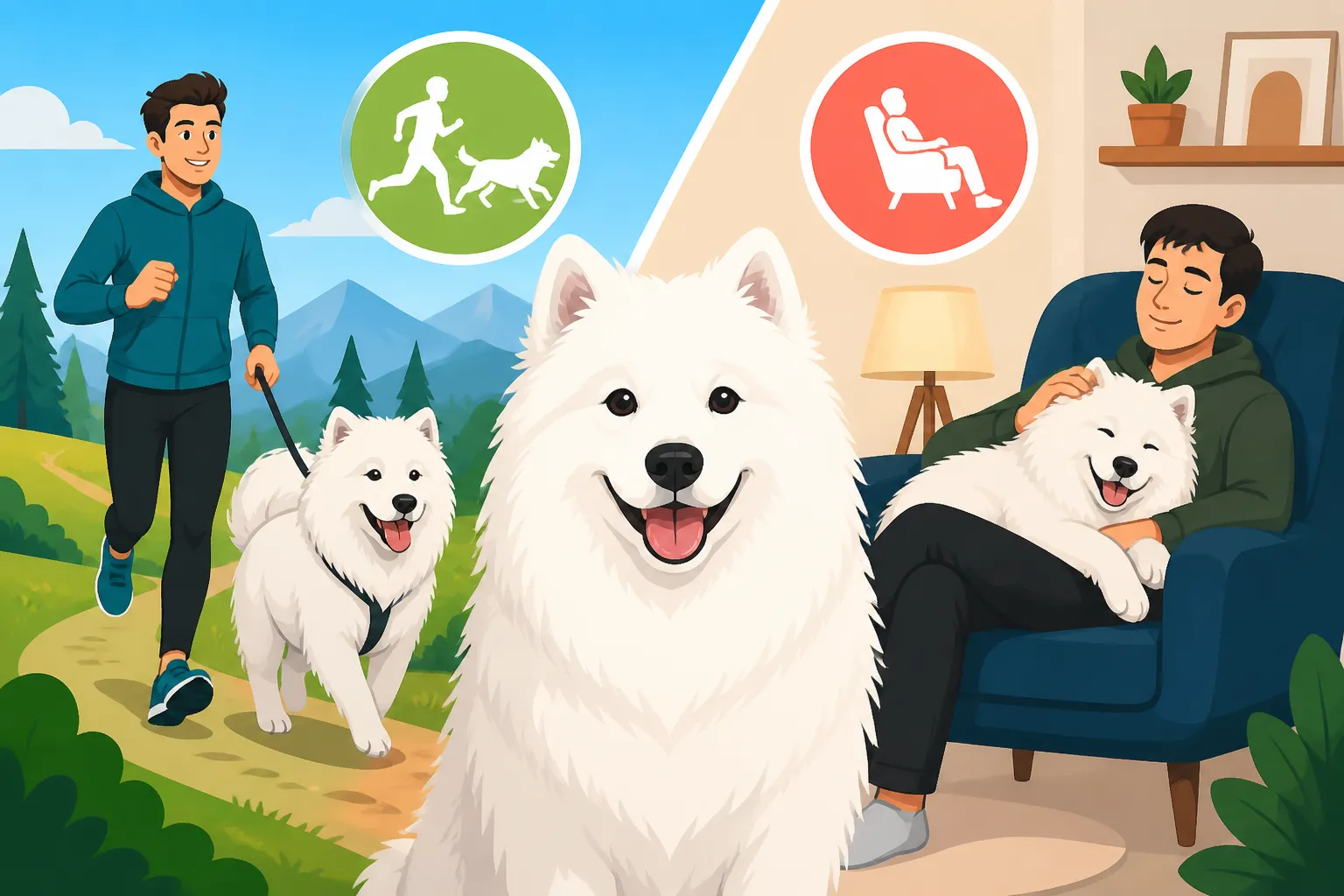
Whether a Samoyed Needs an Active Owner
A Samoyed does need an active owner, but that does not mean you must run marathons or live on a farm. The real challenge is meeting this sociable working dog’s daily needs for movement, company and mental engagement. This guide explains what “active” looks like in ordinary life, how to plan around your schedule, and when a Samoyed may not be the right fit.
What an active owner means for a Samoyed
Daily movement matters more than athletic ambition
Samoyeds were developed as working dogs, and many still enjoy having something to do. That might mean a brisk walk, sniffing time, a training session, or a game in a safely enclosed space. The goal is not to exhaust your dog every day. It is to provide regular, suitable activity that helps them use their body and mind.
A short stroll around the block may be too little as the only outing for a healthy adult Samoyed, especially if the dog spends most of the day indoors without interaction. On the other hand, a long forced run is not automatically better. Age, fitness, health, weather, and the individual dog all affect how much exercise is appropriate. Puppies need careful, age-appropriate activity, while older dogs may enjoy shorter outings with more sniffing and breaks.
Think about what your normal weekday looks like. If you can fit in a walk before work and another outing or play session later, plus short opportunities for training and interaction, you may have a workable routine. If your plan depends on one exhausting weekend adventure to make up for five inactive days, it is likely to leave both you and your dog frustrated.
For a more practical look at day-to-day movement, see How Much Exercise a Samoyed Needs. The right amount is not a fixed number that suits every dog. Watch how your Samoyed responds: relaxed settling at home is a useful sign that their needs are being met, while persistent restlessness may mean they need more engagement, a different activity, or help with another issue.
Company is part of the activity plan
Being active with a Samoyed is not only about covering distance. Many Samoyeds want to be involved in household life and can struggle when left alone for long stretches without preparation or company. A dog may get a walk and still feel under-stimulated if the rest of the day is spent with little social contact or enrichment.
This can be especially noticeable in a busy household. You might come home after a full day, take your dog out, and still find them bringing toys, vocalizing, or following you from room to room. That does not necessarily mean they need a harder workout. They may be asking for attention, an activity to think through, or simply time near their people. Why a Samoyed Wants to Be in the Room With You explores this companionable side of the breed.
If you work away from home, consider the whole routine rather than assuming a second dog will solve everything. A midday visit, a trusted dog walker, staggered schedules, or gradual alone-time training may help, depending on your dog. A companion animal is not a substitute for human interaction, and two bored dogs can create more noise and mischief rather than less. For owners weighing work and dog care, Whether a Samoyed Suits Someone Who Works Full Time is a useful related read.
Building a realistic Samoyed exercise routine
Mix walks, play and training
A sustainable routine combines different kinds of activity. Walks provide movement and new smells; play offers interaction; training gives your dog a chance to focus and cooperate. Rotating activities can make ordinary days more satisfying without requiring a complicated schedule or specialized equipment.
For example, a weekday might include a morning walk with time to sniff, a brief training practice during a break at home, and an evening game or outing. On another day, you could replace some walking with a safe, supervised activity that lets your dog explore or work through a food puzzle. Keep sessions manageable and stop if your dog seems uncomfortable, overly tired, or unusually reluctant.
Training counts as meaningful engagement, even when it lasts only a few minutes. Practice simple skills such as coming when called in a secure area, waiting at a doorway, settling on a mat, or walking calmly on leash. Samoyeds can be bright and independent, so keeping sessions upbeat and varied can be more effective than drilling the same cue over and over. Training a Samoyed That Finds Obedience Negotiable offers more on working with that independent streak.
You do not have to buy a lot of gear to make enrichment useful. A meal can be offered through a safe puzzle feeder, or you can hide a few pieces of kibble for your dog to find in a controlled room. If you are shopping for basic enrichment supplies, Chewy is one place owners may compare puzzle toys and feeders; choose products suited to your dog’s size and chewing habits, and supervise new items.
Pulling and outdoor sports need thoughtful planning
Some Samoyeds love activities that draw on their working heritage, including hiking, skijoring, or pulling sports. These can be enjoyable outlets for a fit adult dog, but they are not requirements for responsible ownership. A dog does not need to compete or pull a sled to have a fulfilling life.
Start with your dog’s health and physical readiness. Puppies should not be asked to do strenuous, repetitive work before their bodies are ready, and any dog with mobility, breathing, or other health concerns needs individualized veterinary guidance. Build up gradually, use properly fitted equipment, and learn how to recognize fatigue. The activity should remain enjoyable for the dog, rather than becoming a test of endurance.
Weather is another important part of the plan. A thick double coat and a cold-weather heritage do not make a Samoyed immune to heat. In warm conditions, choose cooler times of day, provide water and shade, and cut an outing short if your dog is struggling. Avoid treating the breed’s energy as a reason to push through uncomfortable conditions. Whether a Samoyed Suits a Hot Climate and A Samoyed Built for Sixty Below in an American Summer cover climate considerations in more detail.
| Activity | What it offers | Practical consideration |
|---|---|---|
| Walk with sniffing breaks | Movement and sensory exploration | Adjust pace and distance to fitness and weather |
| Short training sessions | Focus, learning and cooperation | Keep sessions positive and varied |
| Interactive play | Social time and bursts of activity | Use a safe space and take breaks |
| Food puzzles or scent games | Mental engagement at home | Select safe, suitable items and supervise at first |
| Hiking or pulling sports | A more demanding shared activity | Build gradually and consider age, health and temperature |
Matching the breed to your schedule and home
A yard does not replace engagement
A fenced yard can be useful, but it does not automatically meet a Samoyed’s exercise and companionship needs. Many dogs will spend little time entertaining themselves outside unless a person joins them or gives them something appropriate to do. A yard also needs secure fencing, since some Samoyeds are talented at finding ways out.
Imagine a dog with access to a large backyard who is left outside alone for much of the day. They may still bark, dig, or try to escape because the space does not offer company or purposeful activity. By contrast, a dog in a smaller home can do well when their owner provides regular outings, interactive time, training, and a safe place to rest. Whether a Samoyed Needs a Yard addresses the difference between having outdoor space and meeting a dog’s needs.
The same principle applies to apartments and smaller homes. Limited space does not automatically rule out a Samoyed, but it can make planning more important. You will need reliable outdoor access, a routine that works for your building and neighbors, and a plan for the breed’s vocal nature. A long walk is not the only answer, but neither is expecting a dog to quietly wait indoors all day.
Before bringing a Samoyed home, be honest about the ordinary week, not just the ideal one. Consider commuting, caregiving responsibilities, travel, weather, and whether other people in the household will share dog care. If your schedule changes often, think through who can provide outings and interaction when you cannot. Good intentions are easier to maintain when the plan has backup.
The right activity changes with the dog
A young adult Samoyed may be eager for longer outings and new tasks, while a puppy needs safe exploration and short, positive learning experiences. An older dog may still enjoy walks and games but need more rest, gentler surfaces, or a slower pace. Activity should change as the dog’s body and preferences change.
Pay attention to patterns rather than judging the day by energy alone. A dog that is suddenly reluctant to walk, tires unusually quickly, or seems uncomfortable may need a veterinary assessment rather than more exercise. Similarly, persistent pacing or destructive behavior can have several causes, including boredom, stress, insufficient rest, or a medical concern. More intense exercise is not a universal fix.
If you keep food puzzles or chew items as part of your routine, choose them with safety in mind. Chewy and other pet retailers offer many types of enrichment products, but a product’s label does not replace supervision or a common-sense fit check. A puzzle that is too difficult can frustrate a dog, while an unsuitable chew can pose a safety risk. Start simply, observe how your dog uses the item, and remove it if it becomes damaged.
For owners who want to understand the broader commitment, The Household a Samoyed Was Built For and What Samoyed Owners Wish They Had Known can help you compare the breed’s social and activity needs with your own lifestyle.
Signs your routine may need adjusting
Restlessness is a clue, not a diagnosis
A Samoyed who seems unsettled at home may need more movement or mental engagement, but behavior should be read in context. Barking, digging, chewing, and demanding attention can reflect unmet needs, but they can also arise from anxiety, a change in routine, lack of sleep, or a health problem. Simply adding a harder workout may not address the cause.
Look for patterns. Does the behavior happen after long periods alone, mostly in the evening, or when the dog has had little chance to sniff and explore? Does your Samoyed settle after a walk and a short training session, or remain distressed despite activity? Keeping a simple log of outings, alone time, and behavior can help you notice what changes make a difference.
If the behavior is sudden, intense, or paired with signs of pain or illness, speak with your veterinarian. If it appears tied to fear, separation distress, or persistent behavior problems, a qualified trainer or veterinary behavior professional can help you build a suitable plan. Separation Anxiety in a Samoyed is relevant when distress occurs around being left alone, but an individual assessment matters.
A good fit is about consistency, not perfection
You do not need to be outdoors every waking hour to be a good Samoyed owner. You do need to be ready to make regular time for walks, interaction, training, and companionship. Some weeks will be less active than planned; what matters is having a dependable routine and adjusting sensibly when life gets busy.
A useful self-check is to picture an ordinary rainy Tuesday, not a perfect weekend. Can you still provide an outing, attention, and some opportunity for your dog to think and engage? Is there someone who can help if you are sick, delayed, or traveling? Can you manage the grooming, vocalization, and supervision that come with the breed as well as the exercise?
If your current life allows for steady involvement and you enjoy sharing activities with a dog, a Samoyed may suit you even if you are not a competitive athlete. If you want a dog who is content with minimal interaction and occasional short walks, this breed may feel demanding. The best match is not the person who promises the most exercise; it is the person whose everyday routine can meet the dog’s needs reliably.
Disclaimer
This article is for general informational purposes only and does not constitute professional advice. Laws, prices and regulations vary by location and change over time. Consult a qualified professional for guidance on your specific situation.